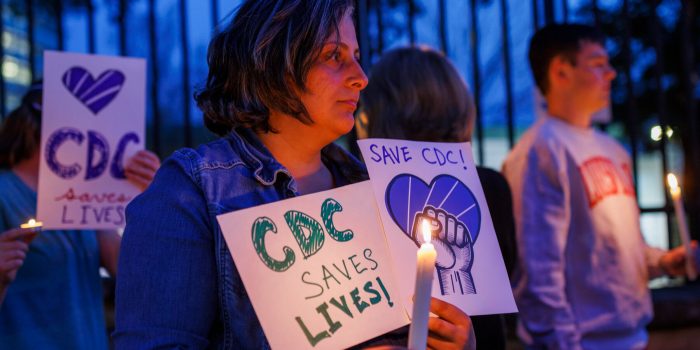
The reorganization that began on Tuesday will scale back an agency that has been a public health model around the world.
The extensive layoffs of federal health workers that began on Tuesday will greatly curtail the scope and influence of the Centers for Disease Control and Prevention, the world’s premier public health agency, an outcome long sought by conservatives critical of its handling of the Covid-19 pandemic.
The reorganization of the Department of Health and Human Services shrinks the C.D.C. by 2,400 employees, or roughly 18 percent of its work force, and strips away some of its core functions.
Some Democrats in Congress described the reorganization throughout H.H.S. as flatly illegal.
“You cannot decimate and restructure H.H.S. without Congress,” said Senator Patty Murray, Democrat of Washington, and a member of the Senate health committee.
“This is not only unlawful but seriously harmful — they are putting Americans’ health and well-being on the line,” she added.
Ms. Murray noted that the Trump administration had not detailed which units are being cut at the C.D.C. and other health agencies. Robert F. Kennedy Jr., the health secretary, said last week the layoffs would affect primarily administrative functions.
But according to information gathered by The New York Times from dozens of workers, the reductions were more broadly targeted. Scientists focused on environmental health and asthma, injuries, lead poisoning, smoking and climate change were dismissed.