
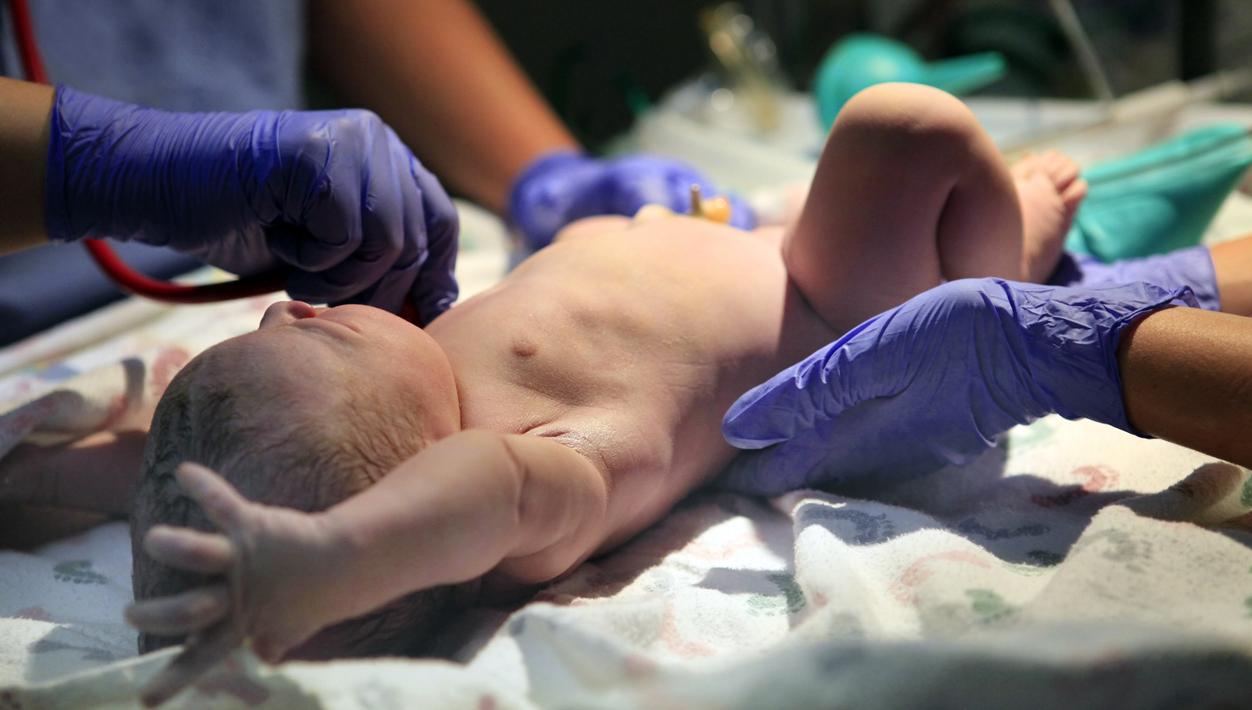
Yesterday the Centers for Disease Control and Prevention (CDC) officially adopted recommendations from the Advisory Committee on Immunization Practices (ACIP) made on December 5 to end universal vaccination against hepatitis B at birth, and instead move to individual-based decision-making that lets parents decide when and if to vaccinate against the virus if the mother tests negative for hepatitis B virus.
The CDC still recommends a hepatitis B vaccine within 12 hours of birth if the mother has hepatitis B or if her status is unknown.
Former recommendation had been in place 34 years
The CDC also said if a baby is not receiving a birth dose of vaccine, the initial dose should be administered no earlier than two months of age. The CDC first made the recommendation for a birth dose of hepatitis B vaccine in 1991, followed by two more doses before 18 months of age to complete a three-dose series.
We are restoring the balance of informed consent to parents whose newborns face little risk of contracting hepatitis B.
“This recommendation reflects ACIP’s rigorous review of the available evidence,” said Acting Director of the CDC and Deputy Secretary of Health and Human Services Jim O’Neill in a CDC press release. “We are restoring the balance of informed consent to parents whose newborns face little risk of contracting hepatitis B.”
The CDC said it is still considering a secondary recommendation made by ACIP, which suggests parents should consult with a health care provider on serology testing to determine whether a subsequent hepatitis B vaccine dose is needed.
Risk-adjusted hospital mortality in the United States has resumed its prepandemic downward trajectory, even as patients present with more severe illness than before COVID-19, according to a large cohort study published in JAMA Network Open.
The findings suggest that, although hospital mortality outcomes have returned to prepandemic levels, the severity of illness has a new, higher baseline.
The retrospective analysis looked at more than 7.8 million hospitalizations at 715 US hospitals from October 2019 through March 2024. Researchers found that in-hospital mortality declined significantly after late 2021 (returning to in-hospital mortality trends seen before COVID), while the severity of illness rose during the pandemic and remained elevated. Standardized mortality ratios followed a linear decline across the study period, falling from 1.00 in late 2019 to 0.80 in early 2024.
‘Past performance does not guarantee future results’
A return to prepandemic in-hospital mortality suggests a resilient hospital system, but as Laveena Munshi, MD, and Chaim M. Bell, MD, PhD, both of the University of Toronto, caution in an accompanying commentary, resilience today shouldn’t be mistaken for an ability to handle major crises in the future.
Fundamental changes in the US health care system in recent years, such as shifts in vaccine programs and funding reallocations, “could predispose the system to additional future shocks on a micro or macro level,” they write.
What’s more, 30% to 40% of critical-care practitioners experienced burnout, depression, and/or anxiety during the pandemic, leading to an exodus of these highly skilled workers. Munshi and Bell wonder if the current system, repopulated with less-experienced workers, will be as resilient.
They noted the study’s limitations, such as not considering regional COVID burden or vaccine uptake and not including hospitals that didn’t continuously report death rates, which may have biased results toward hospitals with greater resources or stronger reporting infrastructures.
“Past performance does not guarantee future results,” Munshi and Bell write, arguing that resilience should not “spawn complacency” as US hospitals face staff burnout and turnover, funding pressures, rapidly shifting health care policies, and an aging population.