
On March 18 and 19, the Advisory Committee on Immunization Practices (ACIP) will meet to discuss COVID-19 vaccine injuries, long COVID, and changes to the committee’s recommendation methodology. Votes may be scheduled on all three items.
A signal detected, studied, and acted on
Myocarditis following mRNA COVID-19 vaccination is real. It was identified early, investigated extensively, and used to guide clinical recommendations.
The Centers for Disease Control and Prevention (CDC) operates the Vaccine Safety Datalink (VSD), an active surveillance network embedded in major US health systems covering millions of patients. Unlike passive reporting tools that collect unverified reports from the public, VSD tracks confirmed medical diagnoses in both vaccinated and unvaccinated populations, allowing researchers to distinguish a genuine safety signal from coincidence.
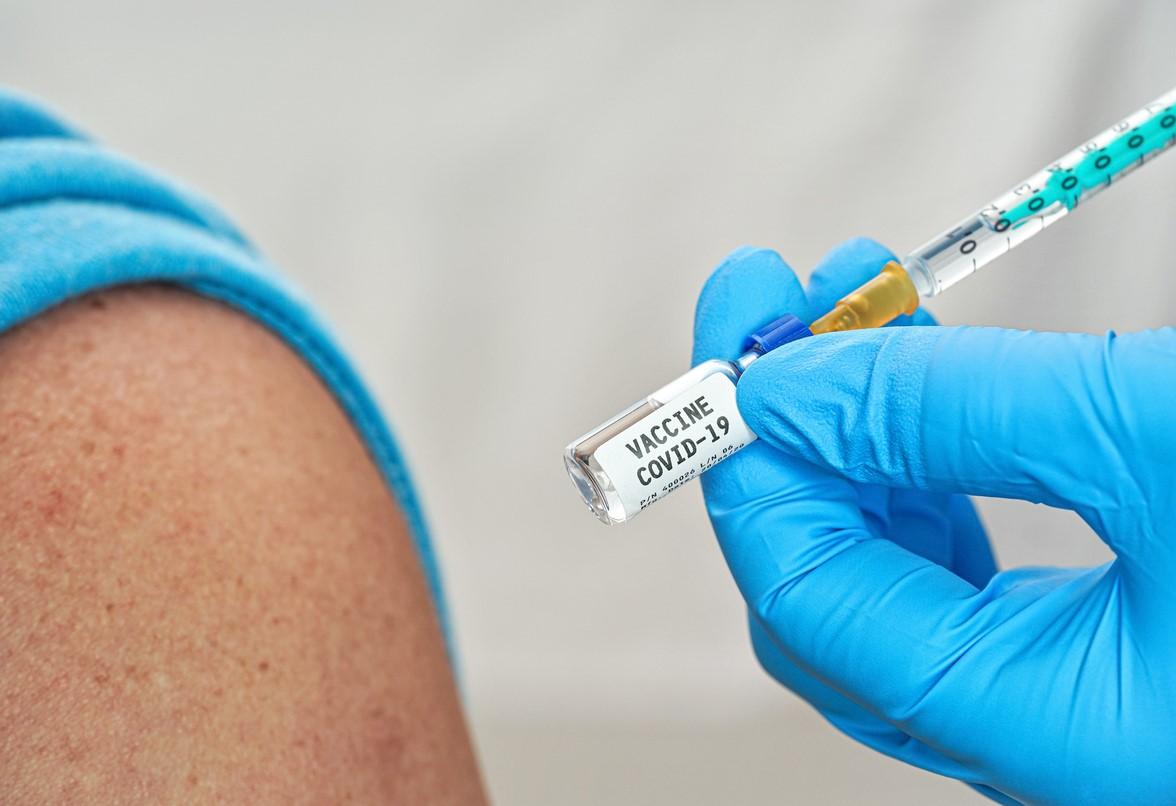
During the COVID-19 pandemic, VSD detected elevated rates of myocarditis—inflammation of the heart muscle—within 7 days of mRNA vaccination in people aged 12 to 39. According to data presented by the CDC Immunization Safety Office at ACIP in June 2025, the rate peaked at approximately 38 cases per million doses after the second dose of the original vaccine in 2021-22, and approximately 25 per million after original monovalent booster doses.
Even the first dose carried a small but statistically significant excess, at approximately six per million. Rates were highest in males aged 16 to 17 and rare in children under 12 or adults over 50.
The system caught the signal. Regulators responded. Guidance was updated to space doses and to prefer the Pfizer formulation in younger males. The speed and transparency of public communication around the signal have been criticized. But the fact that there is a timeline to scrutinize at all is because the surveillance system produced the data. The answer to concerns about how findings were communicated is better communication, not a revision of the rules governing how those findings are weighed.
The risk in its original context
During the same period, the virus itself was causing myocarditis at comparable or higher rates. A study of 5.1 million children in England found that, in unvaccinated adolescent boys, SARS-CoV-2 infection caused approximately 11 excess myocarditis cases per million, compared to nine excess per million after the second vaccine dose.

Infection also caused something vaccination did not: multisystem inflammatory syndrome in children (MIS-C), a severe post-infectious condition that struck 84 per million unvaccinated adolescents aged 12 to 17 and 137 per million children aged five to 11 years. Vaccination largely eliminated the risk of MIS-C.
When vaccine-associated myocarditis did occur, it was typically mild and self-limiting. A French study tracking 4,635 hospitalized myocarditis patients found zero in-hospital deaths among post-vaccine cases. At 18 months, mortality was 0.2%, compared to 1.3% for both post-infection and conventional myocarditis. Canadian data showed intensive care unit rates under 7% for vaccine-associated cases versus 28% for unvaccinated patients. A US study of 333 patients under 30 found zero cardiac deaths and zero transplants, though some patients showed persistent MRI abnormalities warranting follow-up. Korean surveillance of adolescents found 89% of cases were mild, with no deaths.
In 2021 and 2022, the risk-benefit calculus was clear: The virus was causing more myocarditis, more MIS-C, and more death than the vaccines designed to prevent it. But that comparison belongs to a specific moment in the pandemic.
The signal has resolved
Population immunity in 2026 is fundamentally different from 2021. Circulating variants cause less severe disease. MIS-C has essentially disappeared. And the vaccines themselves have changed.
VSD data tell a clear story. After bivalent (two-strain) vaccines in 2022-23, the myocarditis rate in 12- to 39-year-olds fell to approximately two per million doses. With the 2023-24 formulations, it was about five per million. With the 2024-25 formulations, approximately two per million.
The background rate of myocarditis in this age-group—the rate expected in any population regardless of vaccination—is less than two per million. Current vaccines are at that level. Only the original monovalent (one-strain) doses and boosters ever showed a statistically significant excess. The bivalent and all subsequent formulations did not.
These findings hold across countries and databases. A Danish study of more than 1 million adults found no indication of elevated myocarditis risk with JN.1-adapted vaccines. Two US studies evaluating XBB.1.5 vaccines found no signal [study 1, study 2].
On the broader question of mortality, an analysis presented at the same June 2025 ACIP meeting compared post-vaccination death reporting rates to general population background mortality using data from the Vaccine Adverse Event Reporting System (VAERS) and the National Center for Health Statistics mortality database. Death reporting rates within 42 days of mRNA vaccination were consistently below expected background rates across every age-group, from six months through 65 years and older. The observed-to-expected ratio was less than one in every cohort.
Separate VSD analyses confirmed no increased risk of all-cause mortality, cardiac mortality, or non-COVID mortality in the 28 days following vaccination, across both Pfizer and Moderna products, in populations aged 12 and older and in Medicare beneficiaries 65 and older.
The surveillance system that was sensitive enough to detect six excess myocarditis cases per million doses is not detecting excess harm from the current vaccines.
An agenda frozen in 2021
The evidence base on COVID-19 vaccine safety has evolved substantially over the past five years. The vaccines have changed. The virus has changed. The immunologic landscape of the population has changed. The surveillance data reflect all of this.
The March ACIP agenda does not. It is organized around concerns rooted in the early pandemic experience with original monovalent vaccines administered to an immunologically naive population against more pathogenic variants.
It is a fixation on a historical grievance at the expense of present-day public health priorities.
Those concerns were legitimate when they arose. They were investigated. They were acted on.
Continuing to focus on them in 2026, when the products in question are no longer on the market and their successors show no detectable safety signal, is not a serious engagement with the current evidence. It is a fixation on a historical grievance at the expense of present-day public health priorities.
The agenda gets long COVID backward
The March agenda bundles “COVID-19 vaccine injuries and Long-COVID” as a single item, as though both are harms to weigh against each other. The evidence says otherwise.
A systematic review of respiratory virus vaccines published in the New England Journal of Medicine found substantial protection against long COVID, especially in children. One study reported vaccine effectiveness of 57% against at least one long-COVID symptom and 73% against two or more. Population-level data showed effectiveness of 95% in adolescents during the Delta wave, 75% during Omicron, and 60% for younger children during Omicron.
A mediation analysis clarified the mechanism: the vaccine’s protection against long COVID came almost entirely from preventing the initial infection. Among children with breakthrough infections, there was no significant direct protective effect. The implication is clear: the vaccine’s primary contribution to preventing long COVID is preventing the infection itself.
Adult data are more mixed, with some studies showing moderate protection from bivalent boosters and others finding no significant effect. This is nuanced evidence that demands careful, systematic evaluation. Bundling it with “vaccine injuries” as a single agenda item presupposes that vaccination and long COVID belong on the same side of the ledger. The evidence places them on opposite sides.
The evidence problem at the center of this agenda
The concept of “COVID-19 vaccine injury” as it has circulated in public and political discourse relies overwhelmingly on reports submitted to VAERS. VAERS accepts reports from anyone. They are not clinically verified. They do not establish that a vaccine caused the reported event. The system’s own documentation says so.
Its purpose is to generate hypotheses for investigation, not to determine causation. Previous Institute of Medicine reviews of VAERS death reports have concluded that the vast majority were coincidental and not causally related to vaccination.
In November 2025, a memo to staff from Vinay Prasad, MD, MPH, director of the Food and Drug Administration’s Center for Biologics Evaluation and Research, was leaked to the press. It asserted that a review of 96 VAERS death reports identified at least 10 pediatric deaths caused by COVID-19 vaccination. Prasad described this figure as conservative and stated the true number was higher.
VAERS accepts reports from anyone. They are not clinically verified. They do not establish that a vaccine caused the reported event.
The methodology involved subjective causality assessment of individual case reports on a scale Prasad himself described as one where “reasonable people may have subtle disagreements.” The memo lacked a control group, lacked denominators, and relied on a reporting system that has no mechanism to verify the clinical details of the reports it receives.
It is now March. More than three months after the memo leaked, the underlying analysis has not been publicly released, has not been submitted for peer review, and no formal report has been published. But the claim that COVID-19 vaccines killed American children has been circulating in public discourse ever since, shaping the very agenda ACIP will take up this month.
Now look at what the active surveillance systems show. VSD, with its verified diagnoses and defined comparison populations, identified myocarditis as the sole confirmed safety risk specific to mRNA COVID-19 vaccines. That risk has returned to background rates. Post-vaccination mortality is below what would be expected in any unvaccinated population of the same age. The observed-to-expected mortality ratio is less than one across every age-group.
A passive reporting tool that cannot establish causation and an active surveillance system designed to answer these questions are not equivalent sources of evidence. An ACIP agenda built on the former while ignoring the latter is not a serious approach to vaccine safety.
ACIP’s statutory role, established under Section 222 of the Public Health Service Act, is to evaluate evidence and recommend vaccines based on population-level risk and benefit. Vaccine injury adjudication has a separate legal pathway through the National Vaccine Injury Compensation Program. The March agenda steps outside that mandate.
Changing the rules
The third agenda item may matter more than the other two combined.
Since 2010, ACIP has evaluated evidence using the GRADE framework, an internationally recognized system for grading evidence quality and recommendation strength. Since 2018, it has used the Evidence to Recommendations framework to structure how evidence is translated into policy.
These systems are used by the World Health Organization and national immunization advisory groups around the world. They exist to ensure that vaccine recommendations are grounded in the full body of evidence and evaluated systematically, rather than built on selective presentation of individual studies or case reports.
The reconstituted ACIP has already moved away from these frameworks. At the December meeting, the hepatitis B birth dose vote proceeded without a meta-analysis or any systematic evidence evaluation. Several voting members, including some of Kennedy’s own appointees, raised concerns about the lack of assessment criteria. An independent review by 14 former ACIP voting members, published in the journal Vaccine, found that ACIP’s policymaking maturity score fell from 100% to 58% from April to September 2025.
The Recommendation Methodology Review Workgroup is now charged with evaluating “potential revisions” to GRADE and the Evidence to Recommendations framework. What replaces them matters enormously. A methodology that gives equal weight to unverified passive reports and to controlled active surveillance, or that permits recommendations based on selective data rather than systematic review, does not affect just one vote. It changes the rules for every future recommendation on every vaccine.
The myocarditis question illustrates exactly why this matters. The evidence on this topic spans five years, multiple countries, multiple surveillance systems, and an evolving risk profile that has shifted from a real signal with the original vaccines to no detectable signal with current formulations. Reaching that conclusion requires looking at the totality of the evidence. A framework that allows any of these data points to be evaluated in isolation, or weighed against unverified case reports as though they carry equivalent value, will produce worse policy. Not just on COVID-19 vaccines, but on everything else this committee touches.
What should be on the agenda
The United States has recordedmore than 1,100 measles cases across 27 states and New York City in the first eight weeks of 2026, already approaching half the total for all of 2025, which was itself the worst year for measles since 1991.
Vaccination rates are falling. The Pan American Health Organization had scheduled a special session in April to review the country’s measles elimination status; at the request of HHS, it has been postponed to November. The American College of Obstetricians and Gynecologists has withdrawn from ACIP, citing concerns about scientific integrity. Federal courts are evaluating whether the committee was lawfully constituted. The upcoming meeting, originally scheduled for late February, was postponed after the Department of Health and Human Services—helmed by vaccine critic Robert F. Kennedy Jr.—failed to meet the required Federal Register notice deadlines and will now be held virtually.
ACIP has limited meeting time, significant statutory responsibilities, and a measles crisis that demands its attention. Instead it has chosen to spend its March session on an agenda item outside its mandate, supported by a leaked memo that remains unpublished and unreviewed four months later, and premised on a myocarditis risk that its own surveillance systems show has resolved to background levels with every vaccine formulation available today.
The same data show no excess mortality in any age-group after COVID vaccination, substantial protection against long COVID in children, and a safety monitoring system that did exactly what it was built to do.
The data presented here bear this out. The system worked. It found the signal, characterized it, and tracked its resolution.
The system worked. It found the signal, characterized it, and tracked its resolution.
What remains to be seen is whether a committee charged with evidence-based vaccine policy will follow the evidence where it leads, or whether the March meeting will confirm what the agenda already suggests: that the process has been subordinated to a political project with less to do with protecting the public than with relitigating a pandemic the rest of the country has moved on from.
Dr. Scott is a clinical associate professor of infectious diseases at Stanford University School of Medicine, a co-author of “Updated Evidence for Covid-19, RSV, and Influenza Vaccines for 2025-2026” in the New England Journal of Medicine.
The opinions voiced in CIDRAP Op-Ed pieces are the authors’ own and do not necessarily represent the official position of CIDRAP.