We expect updates to practices that help protect the lives of our children to be backed by the best possible evidence.
And when the federal government alters a policy that has shaped pediatric care for decades—one that affects the 70 million children in this country—there is an expectation of serious rigor to weigh the risks and benefits. Not agreement, necessarily. But rigor and transparency, along with a clear accounting of how the decision was made and what its impacts are likely to be.
For decades, when it came to vaccine policy in the United States, that was the norm.
It wasn’t always pretty. It was sometimes hard to follow, but whether we knew it or not, a year-round, expert-led and rigorous process played out across countless Centers for Disease Control and Prevention (CDC) Advisory Committee on Immunization Practices (ACIP) working group discussions and full committee meetings. The work these experts did could be tedious, but recommendations were made out in the open and after discussion of the analyses.
Major changes without supporting evidence
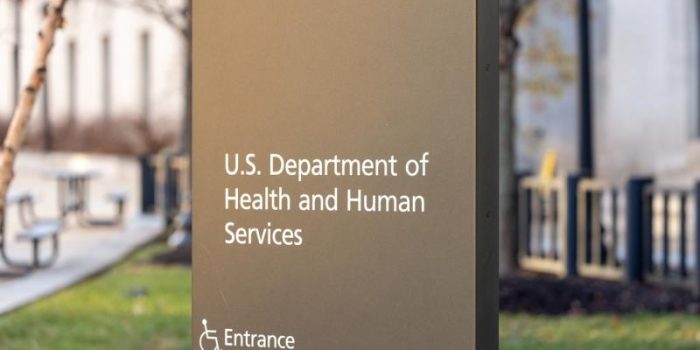
Recently, the US Department of Health and Human Services (HHS) announced substantial changes to the long-standing childhood immunization schedule. In its news release, HHS claimed it followed an “exhaustive review” of the evidence.
But that’s plausible only if the folks leading HHS find Google searches tiring. In truth, the announcement was remarkable for its overwhelming number of absences—of data, of facts, and of evidence.
Do your own analysis; you don’t need a degree in science: Read the document and see if you can find any estimates of whether hospitalizations or deaths of American children related to influenza or rotavirus will change after the vaccine recommendation is eliminated from the routine schedule. You won’t.
The same is true of the other vaccine recommendations that were downgraded—for hepatitis A and B, meningococcal, and COVID-19. There are very little data presented to help us understand what the implications are.
Do your own analysis; you don’t need a degree in science.
To help you do your own assessment, it’s important to understand that in the past, when changes to vaccine recommendations were proposed, several core elements were presented. These included not just the safety and efficacy of a vaccine, but the implications of its access, its uptake, how practical the change would be to implement, and its costs and value. This information isn’t just nice to have. It’s vital for understanding how children’s health will be affected.
First and foremost: epidemiologic data. How common are these diseases? Who is hospitalized? Who dies? How do risks differ by age, geography, nationality, insurance and socioeconomic status? If vaccines are no longer recommended, those numbers matter, because they define how children will be differentially exposed. We got next to nothing from HHS.
Second: real-world vaccine effectiveness and impact information. Not only large-scale population study results, but also evidence from decades of use showing how well these vaccines prevent severe disease, reduce hospitalizations, and protect vulnerable populations through indirect effects. Removing a recommendation without addressing whether these benefits still exist is an egregious omission.
Third: real-world safety performance data. Longstanding vaccines are among the most closely monitored medical products in history. A serious review would summarize what post-licensure surveillance shows, where risks exist, and how they compare to the risks posed by the diseases themselves. Again, nothing.
Most critical: an evidence-based decision would include an explicit risk–benefit assessment. Public health decisions are not made by tallying concerns in isolation; they are made by weighing tradeoffs. What happens when protection is reduced? Which children face greater risk? How do disease risks compare to vaccine risks across populations? Another zero.
Closely related is modeling: before changing a national policy, responsible agencies typically project what those changes will do to disease rates, outbreaks, hospitalizations, and deaths under realistic scenarios of declining vaccine uptake. This is standard practice in public health. It allows policymakers—and the public—to see consequences before they unfold in real time.
Additionally, the CDC has substantial survey capabilities, and the authors of the HHS report could have asked parents and prospective parents how eliminating recommendations for these common diseases would alter their decision whether to get their children vaccinated.
Equally absent was any assessment of implementation and feasibility: How will these changes affect pediatric visits, series completion, access for low-income families, or disparities across communities? How will clinicians explain the shift to parents already navigating confusion and mistrust?
Finally, there was no meaningful public input: no structured consultation with clinicians, medical societies, or other groups that are typically engaged throughout the process to share their advice about the practical implications of proposed changes. And the voices of parents whose children have succumbed to any one of these diseases in the absence of vaccination were also absent.
Not how policy should be made
Taken together, these conspicuous omissions tell a clear story: This was no exhaustive review of evidence. HHS’s assessment instead relies on a handful of papers cherry-picked by authors who are vaccine skeptics, well-worn rhetoric, and gestures toward “trust” and international comparisons while bypassing the actual work of public health analysis and open discussion.
If the federal government wants Americans to understand—and accept—major changes to childhood vaccine policy, it must show its work. Absent that, the message is unmistakable: The work doesn’t exist.
This radical, unserious plan, which is unsupported by the preponderance of evidence, leaves families and clinicians on their own.
So, what exactly were the changes based on? We don’t know for sure, but given the anti-vaccine advocacy of the political appointees running our health agencies, we can make a pretty good guess: an unfounded belief that more kids getting sick and developing natural immunity is preferable to the immunity one can receive from vaccines, driven by ideology, not evidence.
This radical, unserious plan, which is unsupported by the preponderance of evidence, leaves families and clinicians on their own to infer the consequences after the fact.
The American people deserve better. That is not how policy should be made.
And it is certainly not how you protect our children.
Kevin Griffis is director of media relations and public affairs with the Center for Infectious Disease Research and Policy (CIDRAP) at the University of Minnesota.