A new Government Accountability Office (GAO) report says the US Department of Health and Human Services (HHS) and other relevant federal agencies could strengthen its ability to detect emerging infectious disease (EID) threats by improving collaboration across agencies, strengthening data quality and infrastructure, optimizing surveillance methods, and improving public messaging.
The report comes as EIDs such as COVID-19, H5N1 avian influenza, and measles challenge public health systems.
“Emerging infectious disease outbreaks have increased in incidence and impact, posing an ever-present threat to national health, security, and economic interests,” the authors write.
“With factors such as increased global interconnectedness, animal-to-human disease transmissibility risk, and disease virulence contributing to this threat, there is heightened concern that an emerging infectious disease may develop into a widespread outbreak with significant consequences,” they add.
Call for centralized surveillance strategy
To create the report, GAO convened 18 experts in relevant disciplines, including public health, animal health, infectious diseases, medicine, and academic sciences, in April and May 2025.
One of the experts’ top recommendations is establishing a multisectoral, multidisciplinary leadership group to coordinate surveillance efforts across federal agencies responsible for human, animal, and environmental health.
Emerging infectious disease outbreaks have increased in incidence and impact, posing an ever-present threat to national health, security, and economic interests.
“Such a group could address a lack of centralized authority to direct cross-agency surveillance activities leading to inconsistent collaboration that hinders the effectiveness of U.S. surveillance for emerging infectious diseases,” they write.
They also call for a comprehensive national strategy for surveillance of EID threats, which would reduce duplicated data and help integrate surveillance activities.
Need for standardized data
The report highlights the need to improve data quality and infrastructure, noting the current system’s lack of standardized data systems, the absence of a common language across data systems, and outdated technology, “all of which could affect the sharing and completeness of emerging infectious disease surveillance data.”
To address this concern, the expert panel recommend developing common data standards, expanding the use of federated systems that let agencies share information while allowing data to be stored and controlled locally, and reviewing the Centers for Disease Control and Prevention’s Data Modernization Initiative to help jurisdictions better integrate modern technology into their surveillance efforts.
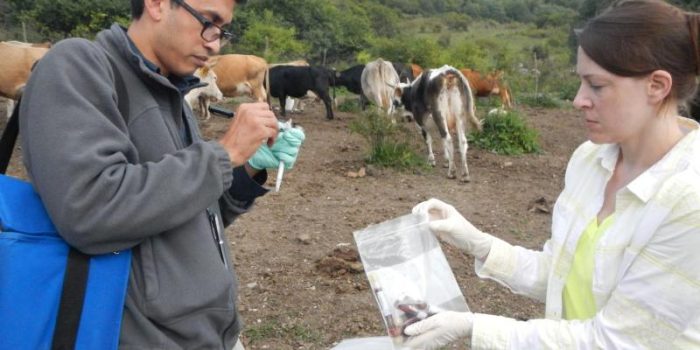
The experts also recommend refining surveillance methods by targeting high-risk animal and human populations, expanding and standardizing wastewater surveillance, adopting more diverse data collection and testing methods, and evaluating the cost-effectiveness of surveillance systems. They also encourage greater use of emerging tools such as artificial intelligence and machine learning to improve data collection and analysis.
Building public trust is essential
To strengthen public messaging and surveillance communication, the experts recommend developing a coordinated communication strategy to build public trust in disease surveillance. “If the public does not trust public health entities and, therefore, is less willing to participate in surveillance activities, then public health agencies may collect incomplete or inaccurate data on the presence of an emerging infectious disease,” they write.
In addition, they recommend using communication experts, behavior-change principles, and trusted community leaders to encourage participation in surveillance efforts and improve public understanding of surveillance activities.
The experts hope the report gives the federal government several possible actions to strengthen federal EID surveillance. “Expert actions offer HHS and stakeholders a chance to assess tradeoffs and feasibility in expanding current efforts or exploring new approaches for infectious disease surveillance, while considering past recommendations by us and others,” they conclude.