

A toddler in Guangxi Zhuang autonomous region in China is confirmed to have contracted H9N2 avian flu, with symptoms starting on May 31, according to the latest updates from Hong Kong’s Centre for Health Protection.
This is the fifteenth H9N2 case recorded in the past 6 months on mainland China, with 11 of the cases occurring in children under the age of 10 years.
Since 2015, a total of 163 cases of human infection with H9N2 avian flu, including two deaths (both in people with underlying conditions), have been reported to the World Health Organization in the Western Pacific, the organization said. Of the 163 cases, 159 were in China.
First H5N1 detections in Australia
In related news, over the weekend Australia’s federal agriculture minister, Julie Collins, confirmed the continent has recorded its first case of H5N1 avian flu, detected in a brown skua that had been found sick in Western Australia and has now died from the virus. A second bird also died from a suspected infection.
Until this detection, Australia was the last continent to have no reported cases of H5N1 in poultry or wild birds since the virus began spreading globally in 2021.
Last week, researchers reported H5N1 likely began circulating on Heard Island, an Australian territory, last August.
The number of kids who contract a potentially deadly diarrheal disease is projected to decrease in some regions of sub-Saharan Africa while increasing in others due to climate change. However, researchers say illness from Cryptosporidium can be mitigated with improved access to clean drinking water.
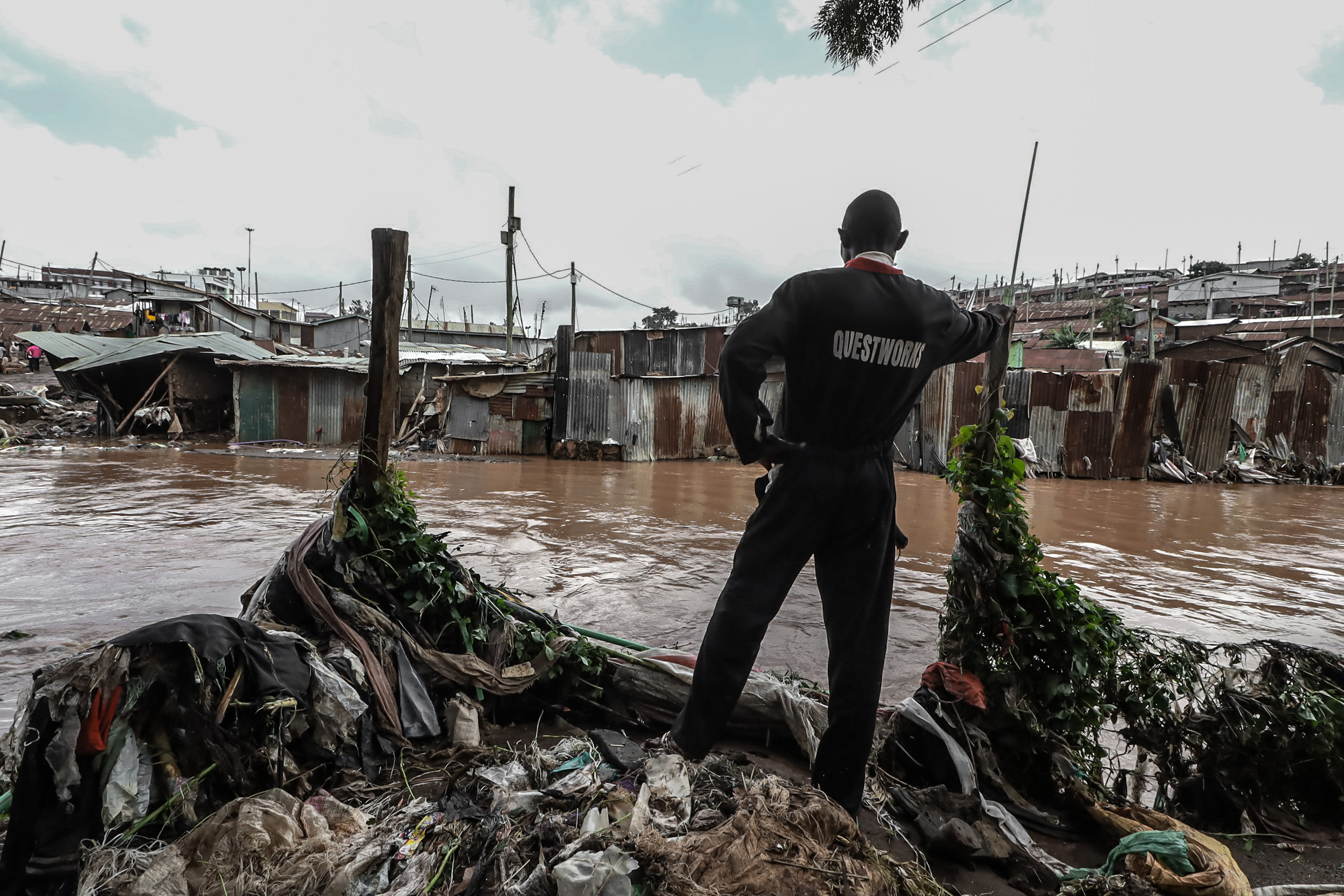
Cryptosporidium is the second-most common cause of diarrhea-related deaths among children younger than 5 years, according to an analysis of the 2015 Global Burden of Diseases, Injuries, and Risk Factors Study. The single-cell parasite spreads during heavy rainfall, though transmission decreases in warmer weather, making this waterborne disease highly sensitive to climate change.
Using global climate change models, a study published yesterday in the Journal of Infectious Diseases predicts that by 2055, higher temperatures will cause rates of Cryptosporidium among children to decrease by 16.93% in Siaya County, Kenya and 4.34% in Bamako, Mali. However, they forecast that higher precipitation will drive up transmission in Basse, The Gambia by 24.81%.
Researchers say that improving access to clean drinking water in areas with the highest burden of climate-sensitive health outcomes can lessen the effects of climate change.

Adolescent pulmonary tuberculosis (TB) survivors have poorer lung function and greater disability than their uninfected peers for up to two years after treatment completion, concludes a study led by Brown University researchers.
For the study, published today in Pediatrics, the research team used lung-function tests and the St. George’s Respiratory Questionnaire (SGRQ) to twice evaluate the lung health of 101 formerly infected participants aged 10 to 19 years in Lima, Peru, who were successfully treated for TB. They compared the results with those of 101 matched uninfected controls.
TB survivors with abnormal lung function underwent chest computed tomography (CT) from March 2022 to September 2023, and the investigators modeled changes in lung function and disability for two years post-treatment.
Dedicated post-TB lung disease studies among adolescents are important because their bodies differ from those of adults. “Even if adolescents have adult-type TB, puberty-related immune changes may modify their risk and clinical phenotype of post-TB lung disease, which likely stems from inflammatory response to Mycobacterium tuberculosis,” the authors wrote. “Moreover, adolescent lungs grow in gas exchange surface area and airway size until, approximately, the age of 20 years.”
Need for post-treatment assessment
Compared with controls, TB survivors had less favorable forced expiratory volume in 1 second, forced vital capacity, total airway resistance (R5), small airway resistance (R5-20), and reactance area (AX).
Over the study period, AX, R5, and R5-20 improved for survivors but were still worse than those of controls. Survivors also had persistently greater respiratory disability. The chest CTs of TB survivors revealed architectural distortion (86.1%), reticular (mesh-like) patterns (80.6%), nodules (55.6%), and bronchiectasis (irreversible widening, scarring, and inflammation of the bronchial tubes; 47.2%).
“Adolescent TB survivors experience persistent, symptomatic chronic lung disease despite bacteriological cure,” the authors wrote. “Our findings highlight the need for respiratory assessments beyond treatment completion.”

When a 10-month-old girl arrived at a hospital in November 2025, she had spiked a fever and was breathing rapidly and shallowly. She recently had been diagnosed as having a rare autoinflammatory disease, and doctors learned she had been fed formula mixed using a device that blended powdered formula with warmed water stored in a reservoir.
Both the water in the device and the home tested positive for Legionella pneumophila, according to a case report published last week in Morbidity and Mortality Weekly Report. The infant’s experience with Legionnaires’ disease highlights the danger of drinking resting warm water.
“Household devices that retain warm water are possible Legionella bacteria sources and might pose a health risk, especially for persons with immunocompromising conditions,” the authors wrote.
Boiling water helps prevent infection
In October 2025, the baby girl had been admitted to the hospital and diagnosed as having systemic-onset juvenile idiopathic arthritis macrophage activation syndrome, a potentially deadly condition in which immune cells overreact. Doctors treated her with immunosuppressant medications, and her health remained stable at follow-up visits.
When she visited the hospital on November 17, 2025, lung radiographs showed fluid in her upper left lobe, and testing revealed she was positive for L pneumophila. Doctors treated her with the antibiotics azithromycin and meropenem, and her condition improved. The girl was discharged on November 30 with parental instructions to give her oral levofloxacin, an antibiotic, for 21 days.
Household devices that retain warm water are possible Legionella bacteria sources and might pose a health risk, especially for persons with immunocompromising conditions.
On December 15, she returned to the hospital, where chest scans revealed new cavities in her left lung. Because her parents had stopped using the formula mixer, doctors suspected that her lingering troubles were related to her original infection. She was given azithromycin for six days and discharged with intravenous antibiotics.
Testing found Legionella bacteria in the mixing device and the filtered household water. While investigators did not test the water filter, they noted that such filters can also allow bacteria to flourish by eliminating chlorine or if people fail to maintain them correctly.
The authors recommend that infants with immunocompromising conditions receive formula made with water boiled to more than 158º Fahrenheit, mixed, and then cooled.