
Yesterday the US Department of Health and Human Services (HHS) announced a $4 million initiative to expand access to rapid, point-of-care syphilis testing. The goal is to reach women in emergency departments and other nontraditional healthcare settings.
Congenital syphilis is preventable, yet too many mothers and babies are still suffering its devastating consequences.
“Congenital syphilis is preventable, yet too many mothers and babies are still suffering its devastating consequences,” said HHS Secretary Robert F. Kennedy Jr. “HHS is putting rapid tests where women receive care so we can detect infections earlier, treat them faster, and protect more babies.”
Congenital syphilis has been on the rise in the past 12 years, with 4,000 cases reported in 2024. In 2023, syphilis contributed to 279 stillbirths and infant deaths. HHS estimates that 83% of congenital syphilis cases in 2023 could have been prevented with timely testing.
“Syphilis during pregnancy can cause miscarriage, stillbirth, infant death, and lifelong medical complications. Yet more than 40% of pregnant women who delivered a baby with congenital syphilis in 2023 did not receive a syphilis test in time to receive adequate treatment before delivery,” HHS said.
The summer of 2026 continues to bring toilet trouble for thousands of Americans, with the Centers for Disease Control and Prevention (CDC) today confirming 13,895 Cyclospora cases and an additional 10,455 infections under investigation.
Of the total, 3,427 Cyclospora cases are new this week. And among the cases are two fatalities and at least 740 hospitalizations.
Last year, the agency tracked only 1,180 cases from May through August, but a major outbreak linked to tainted lettuce and other concurrent outbreaks have contributed to one of the worst years on record for the parasitic infection, which causes lasting, severe diarrhea.
The more than 24,000 cases confirmed or under investigation by the CDC is likely an undercount.
Food Safety News reports that the Cyclospora count from 38 states this year (12 not reporting) stands at 28,056. Michigan reports the most illnesses by far, with 12,485. Last year, Michigan reported 50 cases.
Whole Foods recalls salsas, guacamole
Though the strong majority of Cyclospora cases are from a 15-sate outbreak linked to tainted lettuce grown in central Mexico, the Food and Drug Administration also notes at least two unrelated outbreaks of the parasite with unidentified sources. So far those outbreaks have sickened 172 and 11 people, respectively.
In other food safety news, Whole Foods Market announced it was recalling select products from its produce and prepared foods departments that contain jalapeños sourced from Coast Citrus Distributors over potential Salmonella contamination. The peppers have been implicated in an ongoing Salmonella Javiana outbreak, which has sickened 345 people and hospitalized at least 36 in 27 states.
Whole Foods said no illnesses have been reported to date in connection with these products, which include prepared salsas and guacamoles.
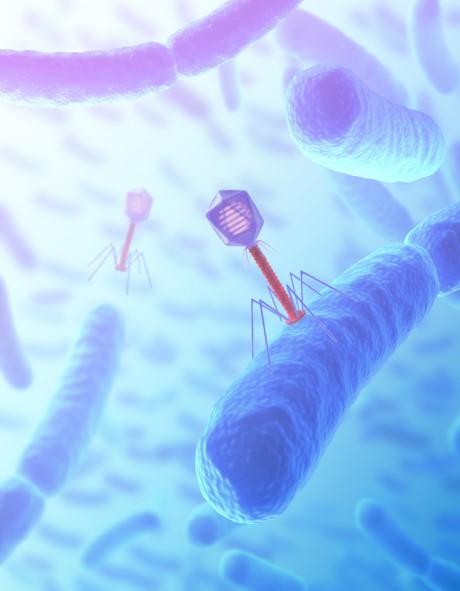
In Science, researchers from Stanford University and the Broad Institute report that the functional bacteriophages they created using artificial intelligence (AI) rapidly destroyed strains of Escherichia coli that had evolved resistance to naturally occurring phages, but experts call for safeguards to prevent the technology from being used for harm.
Bacteriophages are ubiquitous viruses that target, infect, and kill only bacteria. They are found everywhere bacteria live, including the environment and the human gut, and they can be used to treat bacterial infections.
Using the ΦX174 bacteriophage as a model, the team combined their previously built genomic language models with computational biology to produce 16 complete bacteriophages with substantially different genomes.
“Even the simplest genomes are highly complex and can be rendered nonviable by a single mutation,” the authors wrote. “Design at the scale of whole genomes has remained largely beyond reach.”
Urgent biosafety, biosecurity questions
Some engineered phages performed comparably to naturally occurring relatives, and some combinations overcame two strains of E coli resistant to ΦX174-like phages.
“Our approach expands what synthetic genomics can achieve alongside methods such as directed evolution and rational engineering, lays out a path for generating adaptive and resilient phage therapies against rapidly evolving pathogens, and establishes a foundation for the generative design of larger, more complex genomes,” the researchers wrote.
Using such training data to generate genomes of eukaryote-infecting pathogens should not be pursued.
In an accompanying commentary, Thomas Inglesby, MD, and Moritz Hanke, MD, both of Johns Hopkins University, warn that although the finding is promising, “it also raises urgent biosafety and biosecurity questions. The ability to compose viral genomes using generative AI now exists; the governance to safely steer it does not.”
They caution that this technology could be used to create non-therapeutic bacteriophages in eukaryotes such as humans, animals, and plants.
“Using such training data to generate genomes of eukaryote-infecting pathogens should not be pursued,” they wrote. “Such genomes might encode new pathogens that can infect humans, animals, or plants in ways that cannot be contained by existing countermeasures.”
They recommend adapting existing safety frameworks to generative genomics and excluding sensitive viral sequences from training data.
CIDRAP Op-Ed: What the vaccine executive order gets wrong, and what it will cost us
CDC adds almost 100 new cases to expanding US measles outbreak