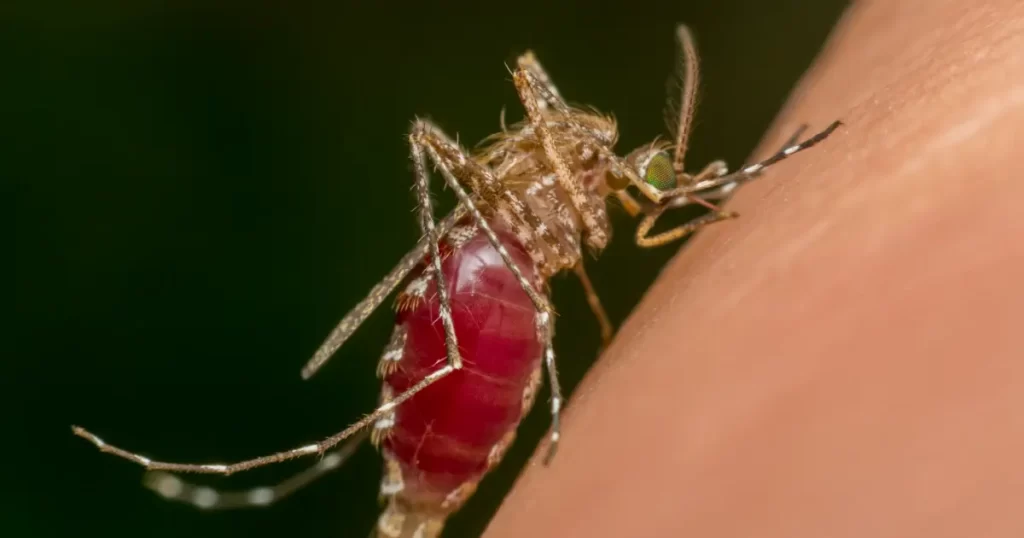
Lyme disease is expanding into southern Appalachia, and a town in the Blue Ridge Mountains appears to be on the edge of this growing territory.
In an analysis yesterday in Morbidity and Mortality Weekly Report, 76.9% of the blacklegged (deer) ticks collected

from residential properties in Biltmore Forest, North Carolina, tested positive for the bacterium—Borrelia burgdorferi—that causes Lyme disease. If left untreated, an infection can result in facial paralysis, irregular heartbeat, arthritis, and other long-term neurologic complications.
Lyme has historically been considered endemic in the Northeast and Upper Midwest. Researchers note that tick surveys in nearby South Carolina counties found a low prevalence of Lyme, which suggests that Biltmore Forest “represents the leading edge of southward expansion.”
In fact, 17 Biltmore Forest residents said they’ve been diagnosed with the disease. They also reported cases of babesiosis and one case of ehrlichiosis, though the researchers, from both South and North Carolina, didn’t find ticks carrying the bacteria that cause these diseases.
However, the researchers identified Borrelia miyamotoi in two adult ticks and two collections of pooled DNA from larval ticks. This bacterium causes hard tick relapsing fever; the most common symptom is a high temperature, though some patients experience chills or shakes, fatigue, joint pain, headache, and nausea.
Wear DEET, check your armpits
The findings show a need for public education about tick-bite prevention in this part of Appalachia, along with expanded surveillance to improve early diagnosis, said the researchers. They noted that many medical providers in the area lack experience diagnosing and managing tick-borne diseases.
To avoid these illnesses, the Centers for Disease Control and Prevention advises people to avoid areas where ticks are found and to apply DEET-containing insect repellent. After coming indoors, people should check their bodies for ticks, including less visible areas like under the arms, back of the knees, and hair.

The best-if-used-by dates of recalled iceberg lettuce associated with the massive Cyclospora outbreak have passed, according to an update from the US Food and Drug Administration (FDA) yesterday. This means that Cyclospora-tainted Taylor Farms lettuce should no longer be available at stores and restaurants.
“The outbreak includes people who reported exposure to processed iceberg lettuce from Taylor Farms de Mexico served or purchased at various locations, including people who previously reported eating at Taco Bell,” the FDA update said. “Most of these illnesses began before the Taylor Farms de Mexico iceberg lettuce recall on July 17, 2026.”
More than 3,100 new lettuce-linked cases
Yesterday, the Centers for Disease Control and Prevention (CDC) updated its numbers of Cyclospora infections linked to Taylor Farms iceberg lettuce. The agency added 3,123 cases, for a total of 9,481 total cases, and hospitalizations rose by 120 cases, to 398. Deaths remained at two, and the number of states affected increased by two, going from 15 to 17.
While the CDC’s numbers have spiked, that could be attributed to a lag in reporting rather than skyrocketing cases. Officials in Michigan, the hardest-hit state of the outbreak, told CIDRAP News last week that most of the recent Cyclospora cases added to their tallies are of people who experienced symptoms before July 16.
Most of these illnesses began before the Taylor Farms de Mexico iceberg lettuce recall on July 17, 2026.
Politicians have been seeking answers about the outbreak with Sen. Elizabeth Warren, a Massachusetts Democrat, being the latest to send a letter about it. The Hill reports that she asked Health and Human Services Secretary Robert F. Kennedy Jr. if lobbying and donations from Taylor Farms led to the “botched response” and poor communication about this summer’s massive Cyclospora outbreak.
Among all US Cyclospora outbreaks, CDC-confirmed cases are nearing 14,000, though counts of each affected state’s total bring the number above 28,000.

The US Food and Drug Administration (FDA) yesterday granted emergency use authorization for Simparica Trio as another potential treatment New World screwworm (NWS) infestations in puppies and dogs. This is the latest medication with emergency approval for NWS in canines after the agency approved nitenpyram for dogs and cats in June. The FDA noted the scientific evidence indicates the benefits of Simparica Trio outweigh its risks.
Most dogs in the United States aren’t likely to be exposed to NSW because of where they live. NWS has been found in some areas of Texas and New Mexico. Dogs who traveled to or live in these areas could have a greater chance of contracting NWS. Right now experts urge dog owners to observe their pups for signs of infestations, which includes maggots and foul-smelling wounds or body orifices, such as noses, mouths, or ears.
Simparica Trio has been used in dogs to treat other parasites
Since 2020 Simparica Trio has been FDA-approved to treat heartworms, fleas, and ticks in dogs, and is available only through a prescription from a veterinarian. An active ingredient in the medication, sarolaner, is an antiparasitic drug that has been associated with neurologic complications, including muscle tremors, loss of coordination, and seizures. It’s recommended that veterinarians monitor dogs taking it.
“We want dog owners to be informed, not alarmed,” Timothy Schell, PhD, director of the FDA’s Center for Veterinary Medicine, said in a press release. “The best thing dog owners can do right now is stay aware of the situation, know the signs of infestation, and have a conversation with their veterinarian if they have concerns.”
CIDRAP Op-Ed: What the vaccine executive order gets wrong, and what it will cost us
CDC adds almost 100 new cases to expanding US measles outbreak