Mothers share so much with their babies, from favorite lullabies and bedtime stories to clothes and toys from their own childhood.
But some of the most important things that moms share with their babies are transferred before birth, in the form of antibodies that protect newborns from disease. Maternal antibodies equip newborns with a ready-made shield against infection during the first few months of life, when an infant’s immune system is still under development.
A mother’s antibodies are shaped by a lifetime of exposure to microbes, and they help babies transition from the sheltered world of the uterus to a world teeming with germs.
One of the pathogens that babies encounter during birth is Escherichia coli, or E coli, a common bacterium that lives in our intestines and is also present in the birth canal.
Although all babies are exposed to E coli, mom’s antibodies usually prevent them from becoming sick, according to a studypublished in Nature last week.
In about one in every 1,000 live births, however, something goes wrong, and newborns develop a life-threatening condition called neonatal sepsis, which can cause inflammation throughout a baby’s body, leading to blood clotting and reduced blood flow to the arms, legs, and vital organs.
One of the most common causes of neonatal sepsis is E coli.
When authors of the new study compared babies with sepsis with healthy controls, they found that those who developed sepsis had 10-fold fewer antibodies to E coli, said Sing Sing Way, MD, PhD, senior author of the paper and chair of infectious diseases at Cincinnati Children’s Hospital Medical Center.
The study’s findings are “uplifting,” Way said, “because we found nature got it right 99.9% of the time.”
A paradigm shift
The study helps pediatricians better understand a common cause of serious illness in newborns, said David Higgins, MD, MPH, an assistant professor of pediatrics at the University of Colorado Anschutz, who was not involved in the new research.
“This is exciting science that helps explain why some otherwise healthy newborns get a life-threatening illness from a bacterium that lives harmlessly in everyone,” Higgins said. “This opens up new possibilities for identifying at-risk newborns with screening and potential prevention strategies.”
Doctors have assumed that infants who develop sepsis in the first few days of life were infected by their mothers, said Christina Megli, MD, PhD, a maternal-fetal medicine specialist at the University of Pittsburgh Medical Center.
The new paper “is sort of paradigm shifting,” said Megli, who was not involved in the research. “It’s a different way of thinking about this.”
Trying to understand why some newborns become sick
E coliis the leading cause of neonatal sepsis and poses a particularly high risk to preterm infants, or those born before the 37th week of a 40-week pregnancy. About 1.3 million cases of neonatal sepsis are diagnosed worldwide each year. Sepsis is the third-leading cause of neonatal deaths and kills 203,000 infants a year.
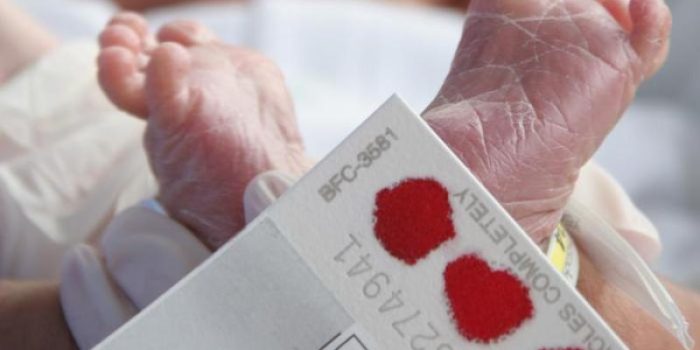
Way and his colleagues performed their study by comparing blood samples from 100 babies with neonatal sepsis to those of nearly 300 babies without sepsis. The researchers worked with dried blood samples from Michigan’s BioTrust for Health, which saves unused blood samples obtained from babies on the first day of life for routine newborn screening. When comparing babies, the researchers matched samples from infants diagnosed as having neonatal sepsis with babies of the same sex and gestational age.
Study authors don’t know why some babies have such reduced levels antibodies against E coli. The bacteria, which live in our intestines, are ubiquitous.
“It’s possible a small proportion of mothers colonized with E coli do not develop antibodies to these particular bacteria,” Way said. “Alternatively, the E coli colonizing these mothers are invisible to the immune system, or there was some problem transferring these antibodies to the baby.”
Lingering questions
The new paper provides no information about the mother’s health, so it’s impossible to know if mothers were sick when they gave birth, Megli said.
For example, the mothers could have had a bacterial infection called chorioamnionitis, which can develop in the amniotic sac if membranes rupture prematurely. In that case, mothers may have transferred fewer antibodies to the fetus because their antibodies were already busy fighting an infection, Megli said.
It’s also possible that some mothers didn’t have enough anti–E coli antibodies because they were taking medication that compromised their immune system, or had an immune-system disorder, Megli said.
The paper also doesn’t include information about whether mothers were able to nurse during the baby’s first few days and weeks, Megli said. Breastfeeding is associated with a low rate of sepsis and other life-threatening infections in babies.
The first breastmilk that mothers produce, called colostrum, is so packed with antibodies, growth factors, and proteins that doctors call it “liquid gold.”
When a newborn develops an infection, “we always think about whether it could be a mom problem, a baby problem, or a placental problem,” Megli said.
Searching for a way to prevent neonatal sepsis
As part of the study, Way and his colleagues tested ways to prevent neonatal sepsis in mice. “Mice involved in the study had been raised without exposure to germs and had no natural antibodies to E coli. Neonatal mice born to mothers without this natural exposure were all highly susceptible to E coli infection”, Way said.
Introducing a probiotic strain of E coli to female mice before pregnancy, however, stimulated the production of antibodies that protected their pups from infection, according to the study. The probiotic, called Nissle 1917, is not available in the United States, but is sold over the counter under the trade name Mutaflor in Europe, Asia and Australia. The supplement is marketed as a treatment for constipation, diarrhea, and other digestive conditions.
In the short term, the team hopes to develop a screening test to identify newborns at highest risk of severe E coli infections. Eventually, the study authors would like to develop a probiotic that’s safe for women of reproductive age to take to strengthen their own immunity, as well as the immunity transferred to their babies.
“One of the things we could do to identify babies at risk for E coli is to test women during pregnancy to see which ones don’t have these anti–E coli antibodies, or have really reduced levels,” Way said. “If we found those women, it would mean that their babies are at very high risk of developing E coli sepsis, and warrant more careful observation.”
If further studies show the probiotic is safe and effective, Way said, women could take it before becoming pregnant. Doctors generally caution women not to take medications during pregnancy, except when absolutely necessary, because of potential risks to the fetus.
Higgins said that scientists will have to conduct much more research to confirm the findings in the new study.
“I would caution against getting ahead of the evidence, but the potential to develop and test screening and prevention tools is promising,” Higgins said.
Bacteria becoming resistant to antibiotics
Preventing neonatal sepsis is important, because the disease is becoming harder to treat.
Although doctors treat neonatal sepsis with antibiotics, a growing percentage of bacteria are developing mutations that allow them to resist these medications.
In one study, only about one in five infants who developed E coli–related sepsis in the first three days of life responded to the most commonly prescribed antibiotic, called ampicillin. Nearly 8% of bacteria were resistant to both ampicillin and a second antibiotic called gentamycin, according to the study, published in JAMA Pediatrics in 2020.