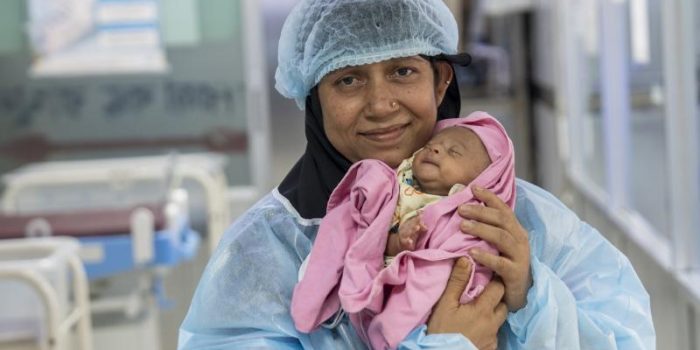
A report yesterday from the World Health Organization (WHO) says progress to reduce childhood deaths slowed in 2024, as an estimated 4.9 million children died before their fifth birthday. Of those, 2.3 million newborns died in their first month of life.
Among the leading cause of deaths among newborns were complications from preterm birth (36%) and complications during labor and delivery (21%), in addition to sepsis and neonatal infections.
Though deaths in children younger than five years globally have fallen by more than half since 2000, the pace of reductions since 2015 has slowed by more than 60%.
Globally, the share deaths in this age-group caused by nine infectious diseases (malaria, pneumonia, diarrhea, sepsis, meningitis/encephalitis, tuberculosis, measles, HIV/AIDS, and tetanus) dropped from 58% in 2000 to 43% in 2024. In sub-Saharan Africa, they declined from 73% to 54% in the same span.
Malaria still a major cause or pediatric death
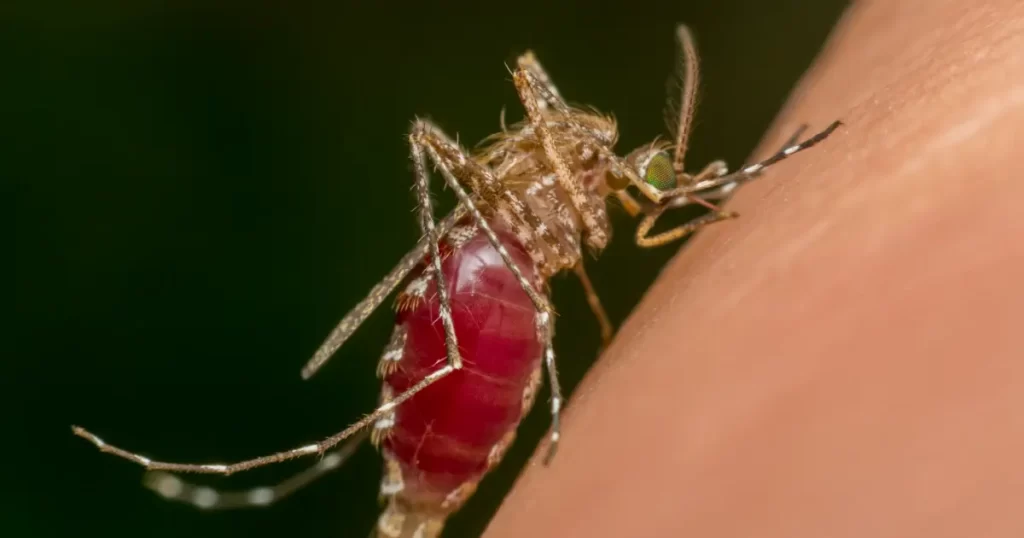
Malaria remained the single largest killer in children beyond the first month worldwide, linked to 17% of deaths in 2024, with most deaths occurring in endemic areas of sub-Saharan Africa. From 2000 to 2015, the WHO said there were steep declines in malaria mortality, but progress has stalled in the past decade.
Chad, the Democratic Republic of the Congo, Niger, and Nigeria report most malaria deaths. Conflicts in those countries have been linked to an increase in preventable pediatric deaths, the WHO said.
Pneumonia and diarrhea were also leading culprits of fatalities in children.
Sub-Saharan Africa accounted for 58% of all under-five deaths. Australia and New Zealand, in contrast, accounted for only 6% of deaths in that age-group. North American and Europe each account for 9% of such deaths.
“The world has made remarkable progress in saving children’s lives, but many still die from preventable causes,” said Tedros Adhanom Ghebreyesus, PhD, WHO director-general. “Children living amid conflict and crisis are nearly three times more likely to die before their fifth birthday. We must protect essential health and nutrition services and reach the most vulnerable families so every child has the chance not only to survive, but to thrive.”
Low-cost interventions, including vaccines and antibiotics, are the best interventions to prevent deatsh in young children, the WHO said.
While infectious diseases account for a high percentage of deaths among those ages 0 to 5, the teen years see a shift, with self-harm as the leading cause of death among girls aged 15 to 19 and road traffic injuries as the leading cause among boys. The WHO said an estimated 2.1 million children, adolescents, and young adults aged 5 to 24 died in 2024.
“These estimates demonstrate that many deaths among children under five—from causes such as preterm birth, lower respiratory infections, to injuries—are avoidable with proven, costeffective interventions,” said Li Liu, PhD, an associate professor at the Johns Hopkins Bloomberg School of Public Health and co-principal investigator of CA-CODE. “The science is clear: targeted investments in primary health care, maternal and newborn health services, routine immunization, nutrition programmes, and quality and timely data systems can save millions of lives.”