- One year after the Trump administration began its dismantling of USAID, a model that tracks the impact of USAID funding cuts on global disease prevention programs estimates that more than 762,000 people have died as a result of those cuts, including more than 500,000 children. According to ImpactCounter, a project built to model the effect on morbidity and mortality from the 90-day USAID funding pause announced on January 20, 2025, cuts to funding for the President’s Emergency Plan for AIDS Relief (PEPFAR) have had the largest impact, resulting in more than 158,000 adult deaths and 16,000 child deaths. Terminated USAID funding has also resulted in more than 164,000 additional child deaths from pneumonia, 125,000 additional child deaths from diarrhea, 70,000 additional adult and child deaths from malaria, and 48,000 additional adult and child deaths from tuberculosis.
- French vaccine company Valneva said earlier this week that it’s pulling its chikungunya vaccine from the US market. In a January 19 press release, the company said it has decided to voluntarily withdraw the biologics license application and Investigational New Drug (IND) application for Ixchiq, its live-attenuated chikungunya vaccine, following suspension of the license by the US Food and Drug Administration (FDA) in August 2025 over safety concerns. The company said it had been waiting to hear from the FDA on its formal response to the vaccine license suspension, which was linked to reports of severe adverse events in older recipients of the vaccine, but was recently informed by the agency that the IND was now on clinical hold pending investigation of a newly reported serious adverse event.
- The Coalition for Epidemic Preparedness Innovations (CEPI) yesterday announced a $30 million investment to make Merck’s Ebola vaccine cheaper to make and more accessible. The investment aims to update the manufacturing process for the vaccine, which was developed during the 2014-2016 West African Ebola outbreak, to make it easier and cheaper to produce at scale and enable it to be stored in a regular refrigerator, which in turn could make it easier to deploy in outbreak settings. The vaccine currently must be stored in freezers at ultra-low temperatures.
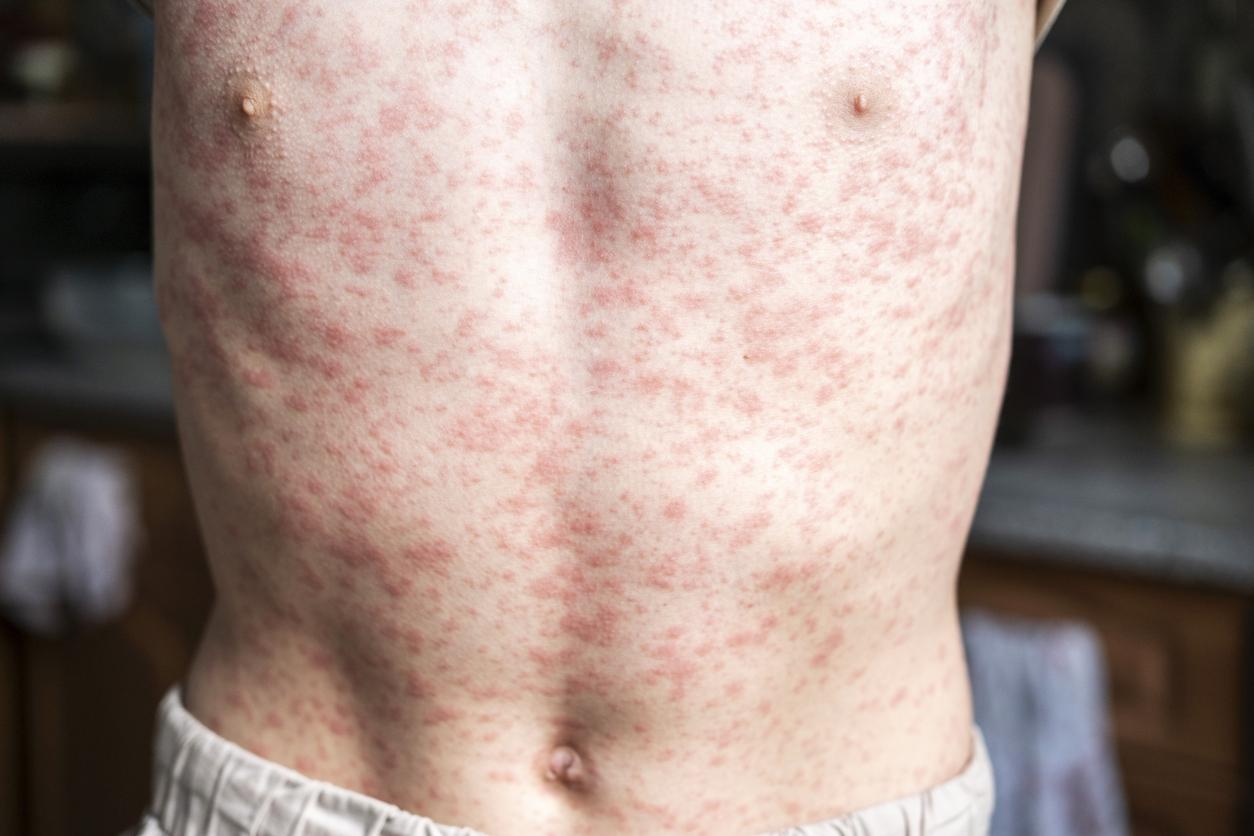
Utah has reported six new measles cases this week, raising state totals in the current outbreak to 216. Of those, 154 cases are in the Southwest Utah health district, which is still battling a cross-border outbreak along with Mohave County, Arizona.
Arizona officials have recorded 12 measles cases so far in 2026, eight of which are in Mohave County. Pima and Maricopa counters each have a case, and Pinal County has two cases.
Elsewhere, two residents younger than five years old have tested positive for measles in Jessamine County, Kentucky, the first cases of the year. Kentucky had 13 confirmed measles cases in 2025.
Abraham erroneously links measles status to international travel
Yesterday, Ralph Abraham, MD, the Centers for Disease Control and Prevention’sprincipal deputy director, said during a press conference that the United States losing its measles elimination status is the “cost of doing business,” suggesting the loss will be due to imported measles cases from international travel.
Measles elimination status does not hinge on imported cases, but rather sustained transmission of virus chains within one country for 12 months or more. Abraham, a doctor and the former Louisiana surgeon general, said he did not think the loss of US measles elimination status was a big deal.
We have these communities that choose to be unvaccinated. That’s their personal freedom
“We have these communities that choose to be unvaccinated. That’s their personal freedom,” Abraham said. “You know, the president, the secretary, we talk all the time about religious freedom, health freedom, personal freedom, and I think we have to respect those communities that choose to go a somewhat of a different route.”
Earlier this week the Pan American Health Organization announced it would review the measles status of the United States during an April meeting. The US has seen a significant spike in measles activity in the last year, most currently in a growing outbreak in South Carolina that has resulted in more than 600 cases.

A large Centers for Disease Control and Prevention study suggests that US school-aged children diagnosed as having long COVID are at 2.5 times the risk of related chronic absenteeism compared with those without the condition.
The study, published last week in Emerging Infectious Diseases, also found double the prevalence of memory impairment, problems concentrating, and learning difficulties in this group.
The researchers used data from the 2022 and 2023 US National Health Interview Surveys to evaluate functional limitations and illness-related chronic absenteeism in a nationally representative sample of 11,057 children aged 5 to 17 years who ever or never had long COVID.
School accommodations may be needed
The analysis revealed that roughly 1.4% of children had long COVID at one time, and older children and girls were disproportionately affected. Relative to children who never had long COVID, those who had the condition had a higher prevalence of functional limitations in five of six functional domains.
School accommodations, such as reduced workload and rest periods that are recommended for other conditions affecting cognitive and academic functioning, such as concussion or ADHD [attention-deficit hyperactivity disorder], could be options to improve outcomes.
Children who had long COVID had about twice the rate of problems with memory (18.3% vs 8.6%), concentration (14.3% vs 7.7%), and learning (19.8% vs 10.4%). This group also had a higher rate of difficulty making friends (18.4% vs 11.3%).
They also had more challenges in accepting changes in routine (37.8% vs 23.0%). In the psychosocial domain, the long-COVID group had a higher prevalence of anxiety (31.3% vs 17.5%) and depression (18.9% vs 6.2%).
Among children who had long COVID, 10.7% missed more than 30 days of school for health reasons in the year before the survey, and 13.9% missed more than 18 days. In the adjusted multivariable model accounting for race and Hispanic ethnicity and parental education level, long COVID was linked to 2.5 times the likelihood of illness-related chronic absenteeism.
“School accommodations, such as reduced workload and rest periods that are recommended for other conditions affecting cognitive and academic functioning, such as concussion or ADHD [attention-deficit hyperactivity disorder], could be options to improve outcomes,” the authors wrote.

A national hospital-based surveillance study from Australia found that the long-acting monoclonal antibody nirsevimab reduced respiratory syncytial virus (RSV)-related hospitalizations in infants under 12 months by over 80% during the country’s 2024 RSV season. The findings were published last week in Eurosurveillance.
Led by researchers from The Kids Research Institute Australia in Perth, the team analyzed data from nearly 4,000 children and adults hospitalized with RSV from April to December 2024 at 22 hospitals throughout Australia. Infants younger than 12 months accounted for nearly 40% of cases. Of all hospitalized patients, 6.6% required admission to intensive care or high-dependency units and of those, 6.1% were children.
Severe disease was most common among infants born prematurely, those with cardiac or neurologic conditions or genetic or metabolic disorders, and First Nations children. The in-hospital mortality rate was low (0.1%) among children, but reached 4.1% among adults.
Population-based vs risk-based approaches
In 2024, immunization strategies for young children across Australia varied by jurisdiction. Two states, Western Australia and Queensland, implemented population-wide infant immunization programs using nirsevimab. The rest of the country relied on targeted, risk-based vaccination programs.
In Western Australia and Queensland, nirsevimab effectiveness against RSV hospitalization in infants under 12 months was 83.1%. Western Australia saw a 50% reduction in hospitalized RSV cases in those younger than 12 months, and hospitalization rates fell by a similar amount in Queensland for those aged 6 months and younger. Total RSV cases in Western Australia and Queensland were significantly lower than in the rest of the country.
Despite some limitations, including reliance on self-reported information from some populations and the possibility of underreporting of immunization status, the findings “demonstrate the effectiveness of nirsevimab in jurisdictions providing population-wide programmes in 2024,” write the authors.

Analysis of more than two decades’ worth of data from 70 countries indicates that gender inequalities influence antibiotic consumption patterns, researchers reported yesterday in the Journal of Antimicrobial Chemotherapy.
For the study, a team led by researchers from the One Health Trust analyzed IQVIA MIDAS data on yearly antibiotic consumption from 70 countries from 2000 through 2002. To assess the influence of gender inequalities, they used four indicators—proportion of women with secondary or higher education, female-to-male labor force participation (FMLP) ratio, proportion of women in parliament, and share of female population—and estimated within-country associations between these indicators and overall antibiotic consumption, controlling for income, education, health care access, health spending, and demographics.
Overall average antibiotic consumption was 19.13 defined daily doses (DDDs) per 1,000 population, with wide variations observed across the 70 countries. Analysis of the relationship between antibiotic consumption and the four gender inequality indicators showed that a one-percentage-point increase in the proportion of women with secondary or higher education was associated with a 0.15 DDD reduction in antibiotic consumption. And a 0.1-unit increase in the FMLP ratio was associated with a 2.45 DDD reduction, while a one-percentage-point increase in the female population share raised antibiotic consumption by an estimated 2.3 DDD.
Women’s parliamentary representation was not associated with antibiotic consumption.
Higher education, workforce participation enhance health literacy
The study authors say the findings highlight gender dynamics as a key social determinant of susceptibility to antimicrobial resistance (AMR).
“Higher education among women likely enhances health literacy, fosters preventive practices such as antenatal care, and promotes rational antibiotic use within households,” they wrote. “Similarly, a higher FMLFP ratio reflects reduced gender inequity and improvements in women’s economic and health empowerment.”
Conversely, they add, the link between a larger female population and higher antibiotic use is likely related to increased health care needs related to pregnancy, urinary tract infections, and longer female life expectancy.
“Overall, this study calls for a multifaceted approach that leverages gender indicators to promote equitable healthcare access, rational antibiotic use, and effective AMR mitigation,” they concluded.

Yesterday the Centers for Disease Control and Prevention (CDC) issued a Health Alert Network (HAN) advisory on recent animal cases of New World screwworm (NWS) in the Mexican state of Tamaulipas, which shares a border with Texas.
“No NWS infestations related to this outbreak have been identified in people or animals in the United States as of January 20, 2026. However, given the potential for geographic spread, CDC is issuing this Health Advisory to increase awareness of the outbreak,” the CDC said.
NWS myiasis (maggot infestation) is transmitted when parasitic flies lay eggs in wounds or in other body cavities, such as the nose, ears, eyes, or mouth. Cattle and horses are typically infected, but flies can also lay eggs on people and other warm-blooded animals. If untreated, infections can be deadly in humans.
Clinicians should consider travel history
As of yesterday, Central America and Mexico have tracked 1,190 cases and seven deaths in people in an ongoing outbreak. Tamaulipas currently has eight active animal cases.
The United States has previously eradicated NWS through releasing sterile male flies to mate with the female NWS fly, which is a type of blowfly. The United States will use that tactic again if NWS is reintroduced in Texas or elsewhere, the CDC said. Last year, the United States did see a travel-related case in Maryland, the country’s first human case in 50 years.
For clinicians, the CDC recommends considering a diagnosis of NWS in people who present with visible egg masses in wounds or orifices, and other symptoms in anyone who has recently traveled to an area where NWS is present.
There have not been any studies to prove that any specific medication is useful in treatment in humans.
“The treatment of NWS in humans is removal of all eggs and larvae, which might require surgical extraction if the larvae are embedded deeply into tissues,” the CDC said. “There have not been any studies to prove that any specific medication is useful in treatment in humans.”
Shingles vaccine may slow biological aging in older adults
Minnesota residents delay medical care for fear of encountering ICE