
French drug company Sanofi yesterday announced it has discontinued development of its next-generation seasonal flu vaccine based on mRNA technology but will continue to pursue a pandemic flu vaccine.
Sanofi reported in its 2025 earnings documents that it was discontinuing its mRNA flu vaccine phase 1 trial. “Sanofi has deprioritized its mRNA-based seasonal flu vaccine program and does not anticipate launching an mRNA-based seasonal flu product in the near term,” a spokesperson told Fierce Biotech, which first reported the news.
Sanofi continues to work on a phase 1/2 study of its mRNA vaccine with an H5 avian flu platform as a tool for preparing for the next influenza pandemic. The firm described preliminary data on that vaccine as “very encouraging.”
Sanofi had hoped mRNA would provide solid protection
In June 2023, Sanofi said it was working on next-gen mRNA seasonal flu vaccines and had brought five different lipids into clinical trials. Its hemagglutinin-based mRNA vaccine candidate performed well against influenza strain A but struggled against B strains—a common problem for first-generation mRNA flu vaccines. Sanofi had hoped the next-generation of mRNA vaccines would also protect against B strains. Hemagglutinin is the “H” in strains like H1N1, H3N2, and H5N1.
Sanofi had acquired Translate Bio, with its focus on mRNA technology, in 2021 for $3.2 billion as part of its multibillion-dollar investment in mRNA vaccines.
“We are focusing on our highly successful high-dose vaccine and our recombinant protein vaccine to deliver protection beyond flu, providing protection not only against flu infection but also flu’s severe complications,” a company spokesperson said.
The person said Sanofi’s Fluzone High-Dose and Flublok vaccines, both approved by the US Food and Drug Administration, continue to demonstrate strong protection against severe outcomes.

Researchers and clinicians in Michigan have developed new guidance for triage and management of suspected urinary tract infections (UTI) symptoms in patients seeking care via telehealth and virtual visits.
Although guidelines exist for the management of suspected UTIs in patients who make in-person visits to outpatient clinics and can be physically examined, there is limited guidance for the increasing number of patients who seek care for presumed UTIs through video visits, phone visits, and portal requests.
“These virtual requests present a unique challenge for clinicians who must decide if the patient’s symptoms are consistent enough with a UTI that antibiotics provide more benefit than risk, without performing a physical examination, and whether urine testing is necessary,” clinicians and researchers from the University of Michigan Medical School and the Veterans Affairs Ann Arbor Healthcare System (VAAAHS) wrote yesterday in JAMA Network Open.
To address this gap, they convened a meeting of national experts to develop appropriateness criteria for urine testing, empiric antibiotic use, and triage for additional evaluations in these patients.
Algorithms guide treatment decisions
The result is two algorithms for uncomplicated UTI management—one for non-pregnant women and one for men—that clinicians can use in any setting to determine whether urine testing, empiric antibiotics, and further examination are needed. The guidance also addresses patients with more complicated health conditions and symptoms that could indicate a more serious health issue.
The authors of the paper say the guidance is needed because UTIs are one of the most common reasons for antibiotic use in outpatient settings, but far fewer patients are being seen in a setting where a urine sample can be collected to confirm an infection.
“We hope that this guide will help both patients and providers be aware that even though they’re now able to take a questionnaire or interact with a provider completely virtually, that alone may not be enough to get the right diagnosis or treatment,” first author Jennifer Meddings, MD, MSc, a clinician and patient safety researcher at VAAAHS and Michigan Medicine, said in a press release.
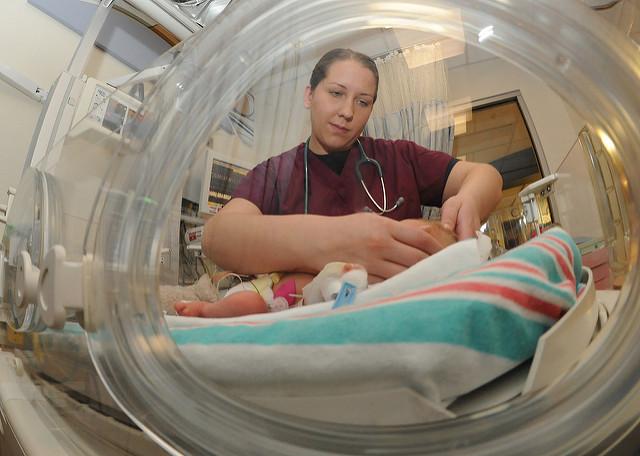
Enhanced infection-prevention measures introduced in neonatal intensive care units (NICUs) during the COVID-19 pandemic were associated with a substantial decline in viral health care–associated infections (HAIs), but they did not reduce rates of bacterial or fungal infections, according to a large study published this week in JAMA Network Open.
The researchers, led by a team at the Children’s Hospital of Philadelphia, analyzed data from 48,475 infants admitted to 12 NICUs in the United States and Canada from March 2018 to July 2022. The goal was to compare infection rates before and amid the pandemic, when measures such as universal masking, enhanced hand hygiene, and increased visitor restrictions were introduced.
Viral HAIs dropped by half in pandemic
Among 41,889 infants evaluated for viral HAIs, rates fell by more than half during the pandemic, from 0.35 to 0.16 infections per 1,000 patient-days. The decline persisted into the second year of the pandemic, even as circulation of respiratory viruses increased.
In contrast, bacterial and fungal HAIs remained the same before and during the pandemic, at 1.70 and 1.78 infections per 1,000 patient-days, respectively.
The findings suggest that infection-prevention strategies like universal masking and enhanced hand hygiene were effective at limiting viral transmission in NICUs during the pandemic but did not curb bacterial or fungal infections. “Preventive interventions beyond those implemented during the pandemic would likely be necessary to further reduce bacterial or fungal HAIs,” conclude the authors.
- Today, Avian Flu Diary notes the discovery of antibodies against H5N1 avian flu in five cows in the Netherlands, although officials have yet to confirm the finding. The infectious disease news blog cited the source as the Netherlands public broadcasting network. The cows were located in Northeast Friesland in the Netherlands’ far north. The news comes a week after the Dutch government announced its first case in a cow in the same province. The case was detected after one of two sick kittens on a dairy farm tested positive for avian flu. After screening cows on the farm, one was found to have antibodies against avian flu. The cow had mastitis and respiratory symptoms in December, two years after the detection of avian flu in Texas cattle in a spillover event. The country has recently seen a number of avian flu outbreaks in birds, including in a pet store and a petting zoo.
- Avian flu has hit a Lancaster County, Pennsylvania, commercial egg-laying facility with more than 1.5 million birds, per the US Department of Agriculture’s Animal and Plant Health Inspection Service. In the past month, 17 commercial flocks and 42 backyard flocks have been affected by the virus, for a total of 2.8 million affected birds.
- Twenty more people in another seven states have been sickened, and two more have been hospitalized, in a Salmonella outbreak linked to moringa leaf dietary supplements, the Centers for Disease Control and Prevention (CDC) said yesterday in an update. The outbreak, which now stands at 65 cases and 14 hospitalizations in 28 states, has been traced to Why Not Natural Pure Organic Moringa Green Superfood capsules. The company pulled the product, which was sold online, this week. Illness onsets ranged from August 24, 2025, to January 11 of this year.
- Afghanistan, the Central African Republic, Chad, and Mali all reported polio cases this week, the Global Polio Eradication Initiative (GEPI) said in its weekly update today. The Afghanistan case, which pushed the 2025 total to 10, was wild poliovirus type 1 (WPV1), and the patient had a paralysis onset of October 20. The Central African Republic noted one case of circulating vaccine-derives poliovirus type 2 (cVDPV2) with paralysis onset on December 6, bringing the country’s 2025 total to two. In Chad, authorities logged one cVDPV2 case with a November 6 paralysis onset, for a 2025 total of 27. Mali documented its first case of cVDPV2 in 2025, which had an October 3 paralysis onset.
South Carolina’s measles outbreak hits 700 cases as CDC confirms 416 so far in 2026