When Actions Speak Louder than Words, RFK Jr. Edition
Welcome to our biweekly series in partnership with CIDRAP at the University of Minnesota.
Health and Human Services (HHS) Secretary Robert F. Kennedy Jr. just wrapped up a busy two-week tour of Congress. During that time, he made seven different appearances on four separate days, racking up nearly 20 hours of testimony before the House Ways and Means Committee, House Appropriations health subcommittee, House Education and Workforce Committee, and Senate Finance Committee. If you followed along, you already know what we mean when we say it was a lot to absorb.
(Transparently, I [Izzy] only made it through about three hours before I needed to reset with a dog walk. To those of you who watched all 20 hours: first of all, kudos. Second, thank you for the summaries. We cannot emphasize enough how grateful we are for you!)
So, what actually happened over the course of these 20 hours? Kennedy acknowledged that the measles, mumps, and rubella (MMR) vaccine is safe and effective “for most people.” He went on to say that HHS promotes and recommends the vaccine for every child. The moment that got us the most, though, was when he conceded under direct questioning that vaccination could possibly have saved a child’s life during the Texas measles outbreak. The tone didn’t match the anti-MMR mantra we’ve grown so accustomed to hearing from him. We’ll admit it… we cautiously exhaled a little.
But then, he refused to commit to implementing vaccine guidance from the new Centers for Disease Control and Prevention (CDC) director nominee, Erica Schwartz, without interference. He denied responsibility for the country’s declining vaccination rates. Cue the head scratching.
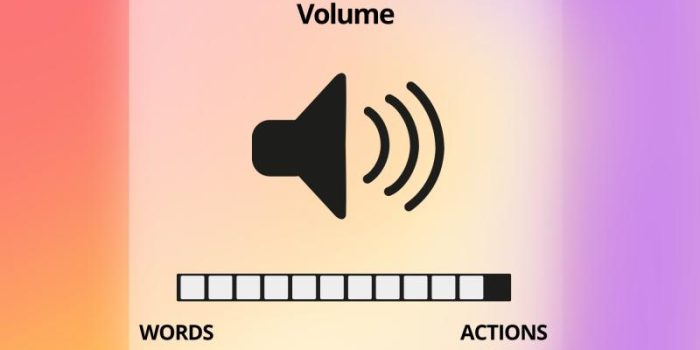
If these past two weeks reinforced anything for us, it’s that the chasm between what gets said on Capitol Hill and what actually ends up playing out in policy has never been wider, and that gap is what today’s issue is all about. Let’s discuss…
The PDF version of today’s update is here. Read past installments here and today’s update on the Unbiased Science Substack here.
AAP v Kennedy
If you’ve been reading this series, you won’t be surprised that we’re starting here. At this point, American Academy of Pediatrics (AAP) v Kennedy has a standing reservation in every issue.
The government asked Judge Brian Murphy to pause the case at the district court level while it decides whether to appeal his March 16th preliminary injunction. What’s odd, though, is that the government didn’t actually signal that it plans to appeal. Plaintiffs’ lawyers say the 10-day window to appeal is closed, meaning the government is asking to freeze a case it may not have legal standing to challenge in the first place.
The timing is notable because both sides had been negotiating the production of the administrative record, which is essentially all the documents and communications related to the government’s vaccine and decisions by the CDC’s Advisory Committee on Immunization Practices (ACIP) over the past year. Thus far, the documentation has been incomplete, suggesting the government may be shifting tactics rather than producing materials that would shed light on how these decisions were actually made.
Guarded but Hopeful?
President Donald Trump nominated Erica Schwartz as the next CDC director on April 16th, just as our last issue was going out. Since we only had time for a brief mention then, consider this a proper introduction.
Schwartz is a retired Rear Admiral in the U.S. Public Health Service Commissioned Corps, a board-certified preventive medicine physician, and a former deputy surgeon general who served during President Trump’s first term. She has no public record opposing vaccines. That said, her predecessor, Susan Monarez, was fired after a vaccine policy disagreement with Kennedy, and Kennedy has already, on the record, refused to commit to implementing Schwartz’s vaccine guidance without interference. As one CDC employee put it, the mood since her nomination has been “guarded but hopeful.” Some have raised concerns that the optimism may be premature, wondering whether the nomination is designed to carry the administration through the midterms rather than an actual U-turn in vaccine policy. No Senate hearing date has been set yet, but she will go before the Senate Health, Education, Labor and Pensions Committee—the same committee that still has yet to vote on Casey Means for surgeon general. Jay Bhattacharya remains the acting CDC director and can continue to issue vaccine recommendations in the interim.
Meanwhile, Kristine Blanche—an integrative medicine physician and wife of acting Attorney General Todd Blanche—was appointed to the National Institutes of Health (NIH) Advisory Council to the National Center for Complementary and Integrative Medicine, which makes funding recommendations to NIH. While this isn’t directly related to vaccines, the membership of a funding advisory committee is important, particularly as the boundaries of what counts as evidence-based medicine face growing political pressure.
President Trump also fired all members of the National Science Board—the governing body of the National Science Foundation, which funds a large portion of the basic research that informs vaccine development and public health infrastructure. This is another page from the playbook we’ve been tracking all year. Quietly dismantling the infrastructure meant to protect scientific decision-making from external political pressures means you don’t have to touch a single vaccine policy directly to undermine the science behind it. You just have to keep removing the people whose job it is to protect scientific rigor and integrity.
Meet the New IACC
Today, the Interagency Autism Coordinating Committee (IACC) is holding its first meeting with a new membership composition appointed by Kennedy. The committee is a federal body that coordinates autism-related research priorities and helps direct over $300 million in annual funding. We looked through the membership biographies released ahead of the meeting, and the results were telling:
- John Gilmore, founder of the Autism Action Network, co-founded American Values 2024—a political action committee that sought to elect Kennedy as president. Katie Sweeney, another member, served as the director of scheduling on that campaign.
- Elizabeth Mumper is a senior fellow at the Independent Medical Alliance—the organization that was added as the new non-voting ACIP liaison in the revised charter we covered in our last issue.
- Ginger Taylor’s biography describes her as a “parent advocate and former family therapist” with a focus on “parental rights, informed consent, and access to health care services.” What her bio doesn’t mention is that she is actually one of the most prolific anti-vaccine content creators in the movement, known for maintaining a list of studies linking vaccines to autism—studies that have been repeatedly and thoroughly debunked (we debunked many of them here).
None of the new members, including the chair, has previously served on the committee. A separate, parallel group, the Independent Autism Coordinating Committee (I-ACC) formed in March in direct response to the IACC’s reconstitution. The I-ACC consists of former IACC chairs, NIH directors, and leading autism scientists, with the goal of ensuring that “science, not misinformation, guides autism research.”
State Roundup
State legislatures have been busy, and they aren’t all moving in the same direction. Here’s what we’ve been monitoring over the past few weeks:
Connecticut Governor Ned Lamont signed HB 5044 into law this week after several weeks of heated debate. The bill expands the state health commissioner’s authority to issue vaccine recommendations independent of federal guidance. It also includes a provision clarifying the state’s Religious Freedom Restoration Act (RFRA), which is what sparked the disagreement and controversy. Connecticut eliminated religious exemptions from school vaccination requirements in 2021, but some families found a legal workaround by invoking the state’s 1993 Religious Freedom Restoration Act. The new law clarifies that the RFRA doesn’t apply to school vaccine requirements, closing the door for workarounds. Critics say the law is rewriting the rules in the middle of an active lawsuit, while supporters say it clarifies what they intended all along.
In New York, A 10711 passed through both chambers on April 21st and awaits Governor Kathy Hochul’s signature. As in Connecticut, the bill decouples the state’s vaccine requirements from federal guidance, anchoring them to AAP and other trusted medical bodies. Just before Tennessee’s legislature adjourned, SB 2070 (the SHIELD Act) was signed by Governor Bill Lee. The law prevents insurance companies from penalizing clinicians who treat patients who decline vaccines. In essence, clinicians can’t be dropped from an insurance network because some of their patients choose not to vaccinate. HB 2569 is still sitting on the governor’s desk after passing both chambers, and we expect to have an update by our next issue. The bill would expand the requirements for what flu and pneumococcal vaccines the state’s hospitals must offer, meaning more patients would be routinely offered these vaccines before leaving the hospital. Public health experts consider this a key way to reach adults who may otherwise miss these vaccines.
We’re keeping an eye on three other states. Florida’s special session opened today and will run through May 1st. The Medical Freedom Act was of particular interest, as it would create a new conscience-based exemption from school vaccine requirements, making it even easier for Florida families to opt their children out of school-required vaccines. However, just before we hit “publish,” Senate Rules Chair Kathleen Passidomo announced she will postpone its consideration during the special session. In Missouri, SB 878 is scheduled for an executive session on April 30th. The bill would update which vaccines pharmacists are allowed to order and administer, potentially restricting pharmacies from administering updated COVID-19 or flu shots. The impact would be most severe in rural areas where pharmacies are often the most accessible point of care. Finally, SB 2856 is scheduled for a Senate health committee hearing on April 30th in Rhode Island. The bill would allow pharmacists to administer the full range of routine, recommended childhood vaccines (not just flu and COVID-19) to children ages 3 to 18, bringing those shots under the same parental consent, reporting, and provider‑notification requirements that already apply when pharmacies vaccinate kids.
What else we’re watching:
- CDC blocked publication of a COVID-19 vaccine efficacy report. A study showing the updated vaccine cut emergency department visits and hospitalizations among healthy adults by roughly half this past season was stopped from publication in MMWR after passing the agency’s full scientific review process. You can read the full manuscript here.
- The military flu vaccine mandate was removed. Defense Secretary Pete Hegseth announced that flu vaccines are no longer required for U.S. troops. The policy had been in place since 1945, largely as a result of the 1918 influenza pandemic that killed more American troops than combat.
- VRBPAC meeting is scheduled for May 28th. The Vaccines and Related Biological Products Advisory Committee will meet to discuss the composition of next year’s COVID-19 vaccine. However, with the ACIP still in limbo under the court stay, any updated vaccines may lack insurance coverage even after approval.
- Bird flu trial launches; Moderna’s combination vaccine approved in the EU. Moderna launched a large bird flu vaccine trial months behind schedule after HHS canceled previously committed funding. Separately, a joint flu/COVID-19 vaccine received European Union (EU) approval. The company withdrew its U.S. application last May amid reported difficulties navigating the Food and Drug Administration’s current regulatory environment.
If reading this made you want to call your state legislator, look up your child’s vaccination records, or just go on a long walk with your dog, those are all completely reasonable responses…
Stay curious,
Unbiased Science
This piece is cross-posted with Unbiased Science.