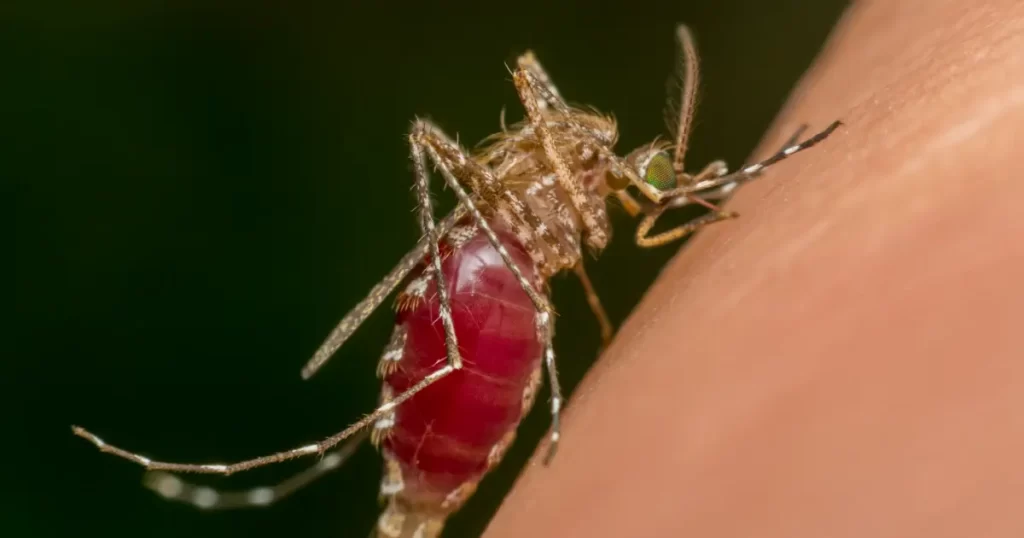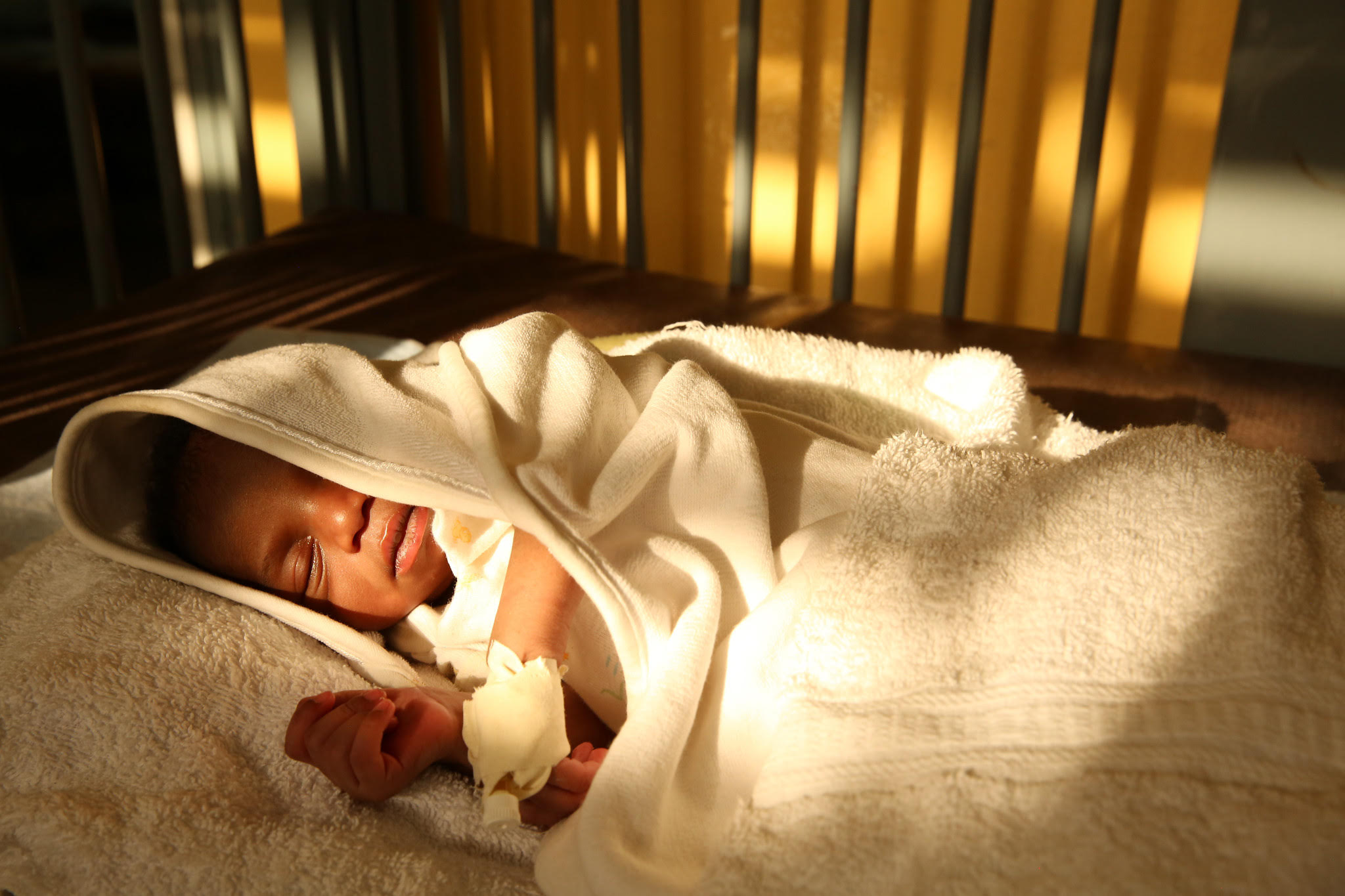
A randomized trial in Kenya and Uganda finds that infants who receive a lower dose of yellow fever vaccine have lower antibody levels against the mosquito-borne disease than those given the standard dose, suggesting that minimum-dose requirements for adults aren’t generalizable to infants.
For the double-blind non-inferiority trial, published yesterday in The Lancet, researchers randomly assigned 420 infants 9 to 12 months old to receive either the standard dose (more than 13,000 IU [international units]) or 500 IU of the live attenuated yellow fever vaccine from October 2021 to June 2023.
The primary outcome was seroconversion, defined as a fourfold or greater increase in antibody levels, 28 days after vaccination. Non-inferiority was shown if the lower bound of the 95% confidence interval for the difference in seroconversion rates exceeded −10 percentage points.
Yellow fever vaccine production is limited by its culture in eggs and cannot rapidly be scaled up in response to outbreaks.
The World Health Organization (WHO) “recommends fractional dose vaccination to address yellow fever vaccine shortages during outbreaks,” the study authors wrote. “In adults, a 500 IU dose has recently been shown to be non-inferior to the full standard dose, but the minimum effective dose for children is unknown.”
Correlate of protection unknown
At 28 days, the seroconversion rate was 99% for the standard dose and 93% for the 500-IU dose in the per-protocol population. The difference in seroconversion rates was −6.15 percentage points, which didn’t meet the non-inferiority threshold. Twelve serious adverse events were reported; all were considered unrelated to the vaccine.
A Rift Valley fever (RVF) outbreak in Senegal that began in September 2025 appears to have ended, according to local media reports.
The outbreak of the mosquito-borne disease, which is endemic in Senegal and neighboring Mauritania, emerged in late September in the two countries following an intense rainy season. In an update in early November, the World Health Organization called the outbreak “unusual in its scale and severity.”
But Senegalese news outlet Le Soleil reported earlier this week that a regional health director said all identified outbreaks in the country are now declared extinguished. Analysis of 5,196 blood samples confirmed 360 confirmed RVF cases in the country, with 21 deaths.
RFV usually affects livestock but can spread to people via contact with the body fluids of infected animals or through mosquito bites. While RVF is always severe in animals, infections in people range from mild flu-like illness to hemorrhagic fevers that can be fatal.
- A group of public health societies, led by the American Academy of Pediatrics (AAP) will seek to prevent the upcoming February Advisory Committee on Immunization Practices (ACIP) meeting from taking place. The AAP and groups including the American Public Health Association and the Infectious Diseases Society of America have also asked to vacate recent changes to the pediatric immunization schedule. “We are confident that we will demonstrate for the court that this administration has acted arbitrarily and capriciously in revisions to the childhood immunization schedule and, furthermore, that the current ACIP will continue this destructive pattern if allowed to continue meeting,” said Richard Hughes IV, an attorney for the plaintiffs, in an AAP press release. A hearing on the plaintiffs’ preliminary injunction is scheduled for February 13.
- Despite President Donald Trump saying all assistance to GAVI, the vaccine alliance would be cut six month ago, the US Senate and House of Representatives have included funding for the organization in their foreign assistance appropriations bill. The bill still needs a vote in both chambers before being presented to the president for approval before it can be signed into law. The United States has provided 13% of GAVI’s annual funding since its inception in 2001. In June 2025, Health and Human Services Secretary Robert F. Kennedy Jr. said GAVI would not get any more US dollars until it worked to “re-earn the public trust” and “start taking vaccine safety seriously.”
- One year after gutting USAID, the Trump administration is launching an $11 billion effort called the America First Global Health Strategy to replace the “NGO industrial complex” and create a new framework for funding public health efforts in foreign nations. The $11 billion will be spent over the next five years through direct agreements with foreign governments, health care organizations, and drug manufacturers. So far, Secretary of State Marco Rubio has signed 15 agreements with African countries, and the State Department estimates to have 50 more agreements in the coming months.
In utero COVID exposure linked to brain changes, developmental delays, anxiety, and depression