Introduction
Stand at the edge of the Grand Canyon, look across a winding river valley, or watch waves reshape a coastline, and you are witnessing one of the most powerful forces on Earth. The story of Water Shaped Landscapes is written across mountains, deserts, wetlands, beaches, and river systems around the world. Although water often appears gentle and fluid, its ability to transform the planet over time is extraordinary.
World Water Week reminds us that water is more than a resource for drinking, agriculture, or industry. It is one of Earth’s greatest architects. For billions of years, rivers have carved valleys, glaciers have sculpted continents, and oceans have reshaped coastlines. The landscapes we know today are, in many ways, the result of water’s relentless ability to erode, transport, and deposit materials across the planet.
How has Water Shaped Landscapes that continue to support life, biodiversity, and human civilization?
Water Shaped Landscapes Through Erosion
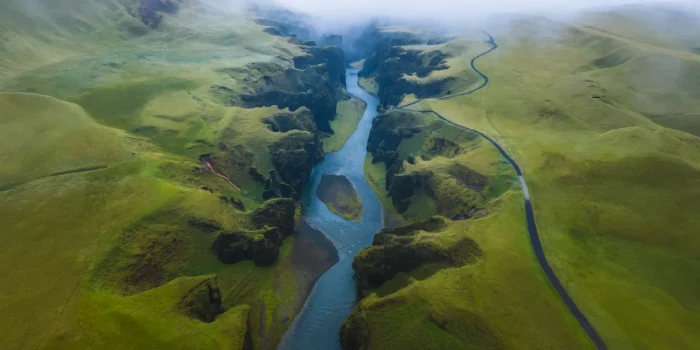
One of water’s most remarkable abilities is erosion. As rivers flow across the land, they gradually wear away rock and soil, transporting sediments over vast distances.
Some of the world’s most iconic landforms were created through this process. The Colorado River and its tributaries carved the Grand Canyon over millions of years. Geological research demonstrates that river erosion has been a major force in shaping valleys, canyons, and drainage systems throughout Earth’s history [1].
Although erosion often occurs slowly, its cumulative effects can transform entire regions.
Glaciers: Frozen Rivers of Change
Not all landscape formation occurs through liquid water. Glaciers, which consist of massive moving bodies of ice, have reshaped continents during multiple ice ages.
As glaciers advance and retreat, they carve valleys, create lakes, and transport enormous amounts of rock and sediment. Glacial activity heavily influenced many of the landscapes found in North America and Europe today.
Studies show that glacial processes continue to influence freshwater systems, mountain environments, and coastal regions worldwide [2].
Coastlines in Constant Motion
Coastlines may appear stable, but they are constantly changing under the influence of waves, tides, storms, and sea-level fluctuations.
Ocean water continuously erodes cliffs, transports sediments, and builds beaches. Coastal wetlands, estuaries, and barrier islands are also shaped by the interaction between land and water.
Research indicates that coastal processes play a critical role in protecting biodiversity, supporting fisheries, and reducing storm impacts on nearby communities [3]. As climate change influences sea levels and storm intensity, understanding these processes becomes increasingly important.
Wetlands: Landscapes Built by Water
Wetlands are among the most productive ecosystems on Earth. These environments form where water remains present long enough to influence soils, vegetation, and ecological processes.
Wetlands help filter pollutants, store floodwaters, recharge groundwater, and support a remarkable diversity of species. Scientists have shown that healthy wetlands provide essential ecosystem services that benefit both wildlife and human populations [4].
Yet many wetlands have been lost or degraded through development and land conversion, reducing their ability to support biodiversity and environmental resilience.
A One Health Perspective
The concept of Water Shaped Landscapes aligns closely with the One Health approach, which recognizes the interconnected relationship between environmental, animal, and human health.
The landscapes formed by water influence where people live, how food is produced, where wildlife thrives, and how ecosystems function. Rivers provide freshwater, wetlands improve water quality, and coastal systems support fisheries and protect communities from storms.
When these water-shaped environments are degraded, the consequences can affect biodiversity, public health, and environmental sustainability. Protecting them helps strengthen the natural systems that support life.
Conclusion
The landscapes we admire today are the result of countless interactions between water and Earth over millions of years. The story of Water Shaped Landscapes is visible in river valleys, glaciers, coastlines, wetlands, and countless other natural features that define our planet.
Water’s role as Earth’s architect continues today. Rivers still carve channels, coastlines continue to evolve, and wetlands remain vital to environmental health. Understanding these processes helps us appreciate the extraordinary influence of water on both the natural world and human society.
World Water Week reminds us that water does far more than sustain life—it helps create the very landscapes upon which life depends.
References
- Whipple, K.X., 2004. Bedrock rivers and the geomorphology of active orogens. Annual Review of Earth and Planetary Sciences, 32, pp.151–185.
https://doi.org/10.1146/annurev.earth.32.101802.120356 - Eyles, N., 2006. The role of glaciers in landscape evolution. Geology Today, 22(2), pp.60–66.
https://doi.org/10.1111/j.1365-2451.2006.00567.x - Temmerman, S. et al., 2013. Ecosystem-based coastal defence in the face of global change. Nature, 504, pp.79–83.
https://doi.org/10.1038/nature12859 - Davidson, N.C., 2014. How much wetland has the world lost? Long-term and recent trends in global wetland area. Marine and Freshwater Research, 65(10), pp.934–941.
https://doi.org/10.1071/MF14173