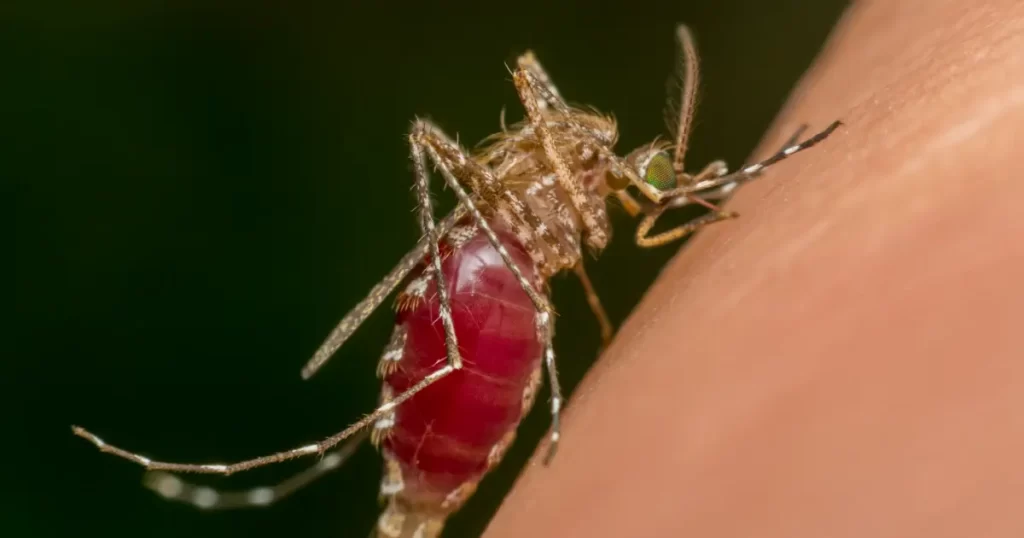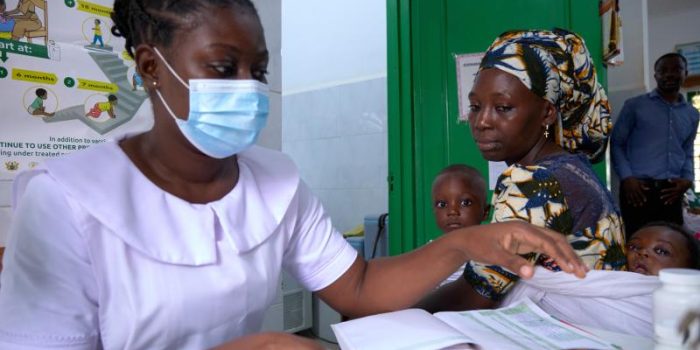
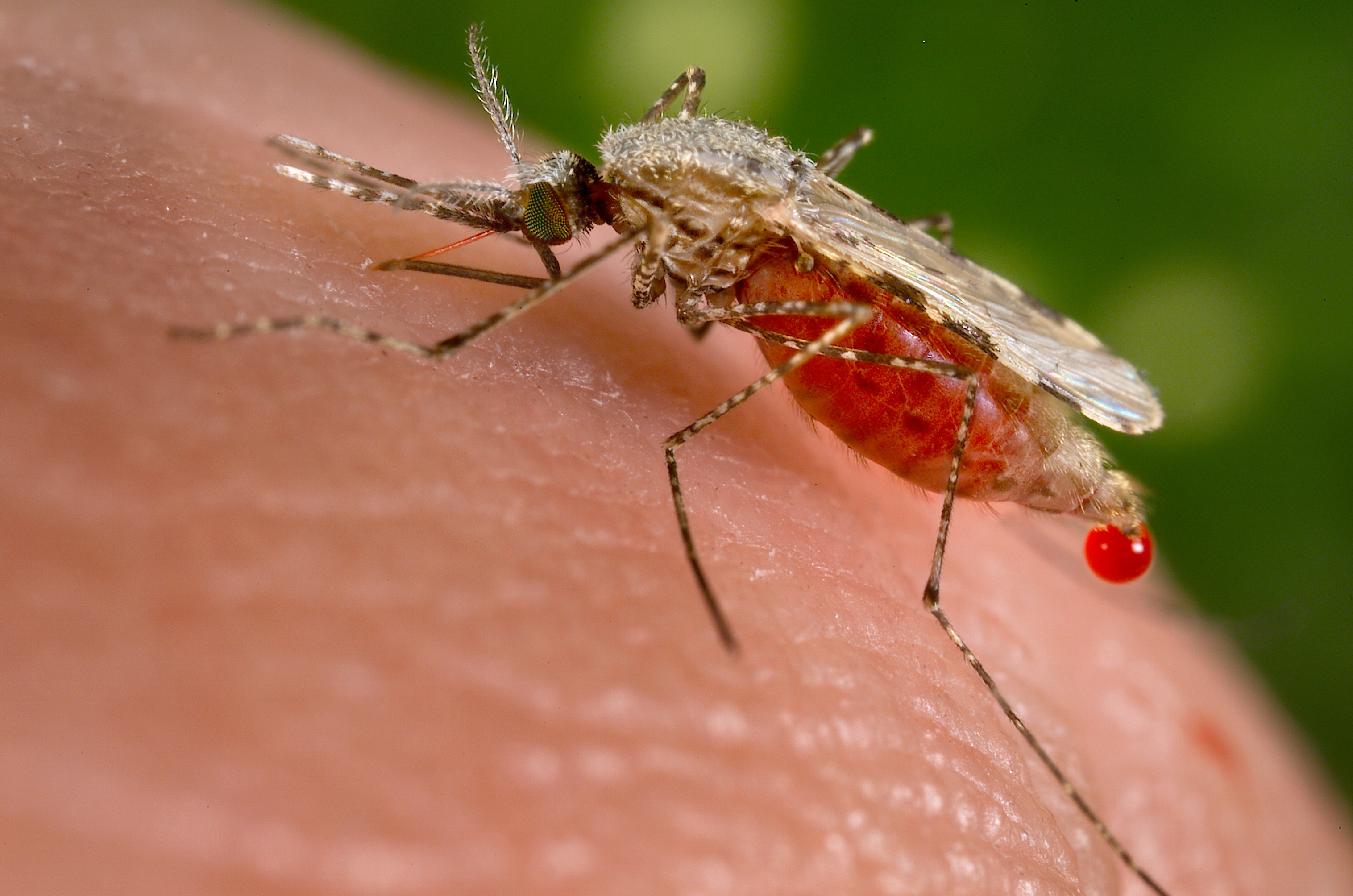
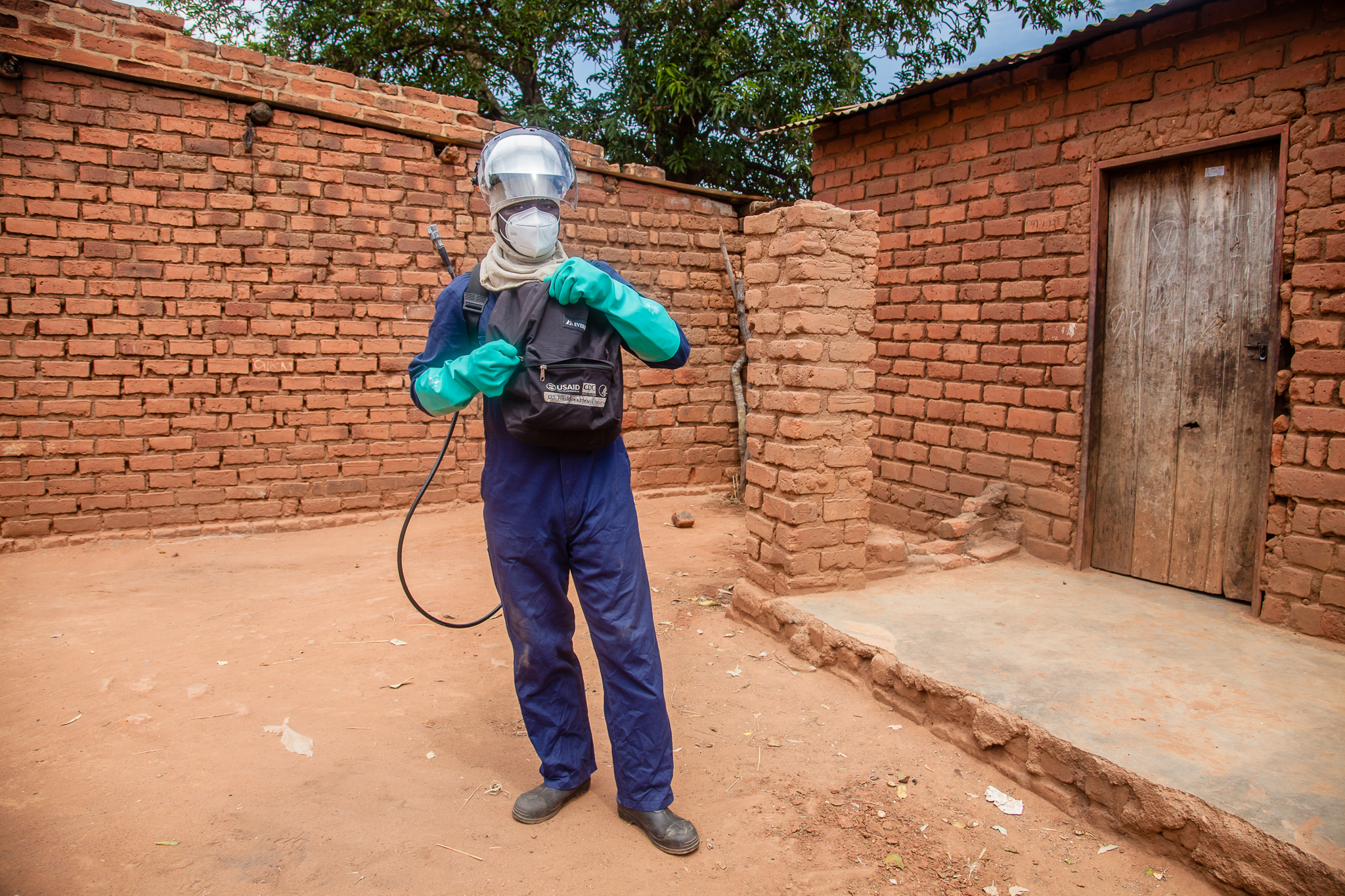
Malaria parasites are transmitted to humans by mosquitoes. The vectors primarily bite at night. In regions where the disease is rampant, people spray the interior walls of their homes with long-acting insecticide so that they can sleep safely.
Indoor residual spraying produced good results in northern Zambia, said Jean-Bertin Bukasa Kabuya, MD, MScPH, a clinical researcher at the National Health Research and Training Institute, located in the city of Ndola.
But there’s no money to continue this mitigation effort, said Kabuya. Last year, the Trump administration dismantled the US Agency for International Development (USAID), forcing health ministries in countries like Zambia to cut back on malaria control and case management.
USAID had been the world’s largest funding agency for humanitarian aid. In its wake, 83% of its programs were canceled. An analysis by KFF, a health information nonprofit, found that 80% of USAID’s malaria awards were terminated.
The state department has since pivoted to the America First Global Health Strategy, which seeks to establish bilateral health agreements that prioritize the security and prosperity of the United States.
As governments negotiate, sources tell CIDRAP News that some countries with high malaria burdens are struggling to fill funding gaps left by USAID and to reestablish supply chains.
The state department did not respond to CIDRAP News’ request for comment.
These disruptions come at a critical time: The global malaria fatality rate has been growing since the COVID-19 pandemic, and there are concerns that the closure of USAID will exacerbate this trend.
In northern Zambia, malaria hospitalizations are now increasing, which Kabuya said is likely due to the lack of spraying.
“We are worried,” he said.
Beating malaria: A matter of will
More than 600,000 people died of malaria in 2024, according to data from the World Health Organization (WHO). Most who die are young children living in sub-Saharan Africa.
Yet dozens of countries, including the United States, have eliminated malaria through a combination of vector control, surveillance, and treatment. Just last year, the WHO declared Georgia, Suriname, and Timor-Leste as malaria-free.
.jpg)
Every malaria death is preventable, said Thom Eisele, PhD, MPH, a field epidemiologist at Tulane University’s Center for Applied Malaria Research and Evaluation.
“No kid should be dying of malaria,” he said. “It’s just a matter of will from the international community.”
That will seems to be waning as wealthy countries, including the United Kingdom and Germany, are cutting their international aid budgets. But shuttering USAID had the largest effect, as the agency’s budget—$43.8 billion in 2023—far eclipsed contributions of other countries.
The United States has continued supporting some malaria programs through other line items. The President’s Malaria Initiative, which had been under the auspices of USAID, received level funding in FY 2026, at $795 million. And the United States pledged $4.6 billion to the Global Fund to Fight AIDS, Tuberculosis and Malaria; the money will help fund the international nonprofit through 2029.
No kid should be dying of malaria.
But malaria transmission didn’t take a break just because funding paused. Eisele is among several sources who told CIDRAP News they anticipate a resurgence of malaria cases and fatalities.
This is already happening in rural parts of the Democratic Republic of the Congo (DRC), said Gretchen Birbeck, MD, MPH, DTMH, of the University of Rochester and Zambia’s University Teaching Hospitals.
It [was] a level of, at best, a cavalier approach to human life. And, at worst, absolute intentional cruelty.
She said that, at some DRC clinics, the malaria death rate in January was three times higher than the same time last year. She attributes this to severe shortages of anti-malaria medications, which USAID had previously supplied.
The issue isn’t simply the loss of USAID financial support. Birbeck said that because the agency was so large and closed so abruptly, poorly resourced health systems had no time to transition.
“It [was] a level of, at best, a cavalier approach to human life. And, at worst, absolute intentional cruelty,” she said.
Malaria is curable but ‘crafty’
Malaria treatments are effective if delivered within a punishingly small window.
Patients should seek care immediately upon showing symptoms, as the disease progresses quickly and can turn fatal, or cause irreversible neurologic damage, within 24 hours. But emergency care is logistically and financially challenging in low-income countries, particularly in rural areas where health facilities struggle with transportation, storage and inventory management.
One way to buy time for children with malaria is with rectal artesunate. This WHO-recommended treatment, often administered as a suppository, is given when there isn’t immediate access to a health care facility. It delivers a high dose of artesunate, which is absorbed directly into the bloodstream, slowing the parasite from multiplying.
Artesunate is a vital intervention that can extend the treatment window by up to 10 hours, said Eisele “We have tools available. The problem is, it’s very hard to implement those effectively.”
There are also two malaria vaccines, recommended for use in children living in moderate to high malaria transmission areas, that reduce severe illness by 30% and mortality by 13%.
These are great mitigation tools, even if the vaccines are not completely protective, said Jane E. Carlton, PhD, director of the Malaria Research Institute at the Johns Hopkins Bloomberg School of Public Health. But they’re not enough to defeat a pathogen that has proven to be a tough foe.
“It’s quite a crafty killer, the malaria parasite. It can evolve very fast,” said Carlton.
Drug resistance to antimalarials is a growing challenge, and, in some cases, rapid diagnostic tests are starting to not work: Plasmodium falciparum, the deadliest of the five malaria parasites, is evolving to evade detection through gene deletion. Delays in diagnosis lead to treatment delays and, at times, hinder disease surveillance. The latter is vital in prevention.
“We’re just running all the time, and the malaria parasite is catching up with us all the time,” said Carlton.
Mosquitoes also present a moving target, and climate change is making it worse.
We’re just running all the time, and the malaria parasite is catching up with us all the time.
Warmer temperatures allow mosquitoes to reproduce faster, which leads to overpopulation. More mosquitoes mean more vectors, which enables the insects to build resistance to pesticides more quickly. A warmer climate also helps mosquitoes spread into new regions, such as Kenya’s Kikuyu highlands.
Violence and economic instability are also factors. For example, the United States’ war with Iran has triggered a national fuel shortage in Ethiopia, where Carlton is collaborating on an epidemiologic study of Plasmodium vivax, another malaria parasite species. But she said that researchers can’t drive to the clinics to meet with patients because they can’t buy enough gas.
Lopsided bilateral agreements
Because the forces driving malaria are dynamic and fluid, it’s hard to say at this time how many people have died as a direct result of USAID closing, especially as more countries sign MOUs.
According to KFF, at least 30 countries have agreements with the State Department. These include Nigeria and the DRC, which had the most and second-most malaria cases in 2024, respectively.
Other countries are walking away from the funding agreements. Zimbabwe reportedly objected because of terms that would have handed over sensitive health information to the United States. Zambia had similar data concerns, and it did not want to permit mining access to its rich mineral deposits.
One benefit of bilateral agreements is the ability to quickly pivot in the event of an emergency, said Stephanie Psaki, PhD, a former US coordinator for global health security at the National Security Council. On the flip side, now that the United States has cut most ties to multilateral health organizations, it might be difficult to respond comprehensively to an emerging threat.
“For example, DRC is bordered by nine countries; to respond effectively to an emerging threat in DRC, the US would need bilateral MOUs with 10 countries,” she said. “It’s much more efficient and effective to work through regional partners, like Africa CDC and WHO.”
New possibilities
Sources told CIDRAP News that, over time, countries that successfully persevere through this post-USAID realignment might end up with health care systems that are more sustainable and effective, and less reliant on the whims of foreign governments.
“I can tell you from my own experience, there’s so much talent and capability in these countries. They really don’t need us, except for some of the money,” said Johanna P. Daily, MD, a malaria researcher at the Albert Einstein College of Medicine.
There’s so much talent and capability in these countries. They really don’t need us.
Malaria is fueled by both biology and systemic inequities. Foreign aid that bypasses bureaucracy and bandages over poverty will never lead to elimination, said Eisele.
“At the end of the day, you have to have functioning, robust health systems,” he said.
This is easier in wealthier countries and harder for those that also grapple with high rates of HIV and tuberculosis. And countries that have the least ability to deal with malaria often face the greatest burden.