Today the World Health Organization (WHO) regional director for Africa told the press that genomic sequencing of the Bundibugyo strain of Ebola virus currently causing an outbreak in the Democratic Republic of the Congo (DRC) shows the virus has been circulating since mid-February, and not mid-May, which was when officials began to suspect an Ebola outbreak in Bunia, DRC.
“So we are chasing the virus, the virus is ahead of us,” Mohamed Yakub Janabi, MD, PhD, said, explaining that initial testing did not pick up the Bundibugyo strain, and many cases were likely misdiagnosed as malaria or typhoid fever.
The WHO did not declare the current outbreak officially until May 17 of this year. In the three months since the declaration, the outbreak has become the fastest growing in history, with response efforts marred by worker strikes, limited contact tracing, and a lack of vaccines or treatments that target the Bundibugyo strain.
The outbreak is now the second-largest in history, following the 2014-2016 outbreak in West Africa, which killed 11,000 people. It’s moving at a quicker pace than that outbreak, though, with an average of 75 to 80 new cases each day. Moreover, contact tracing still lags, withhealth zones reporting only 75% of contact follow-up. Ninety-five percent is needed to control an active outbreak.
Renewed support for Bunia
Last week the WHO and the United Nations (UN) called for intensifying response efforts, as the outbreak is now doubling in certain hot spots in Ituri province.
The Ebola outbreak is outpacing our response.
“In some areas of eastern DRC, the Ebola outbreak is outpacing our response, making it imperative that we rapidly scale up every aspect of our efforts to contain it,” Tedros said in a WHO press release. “We must guarantee safe access for responders, protect civilians and health workers, and mobilize the support needed to end this outbreak and save lives.”
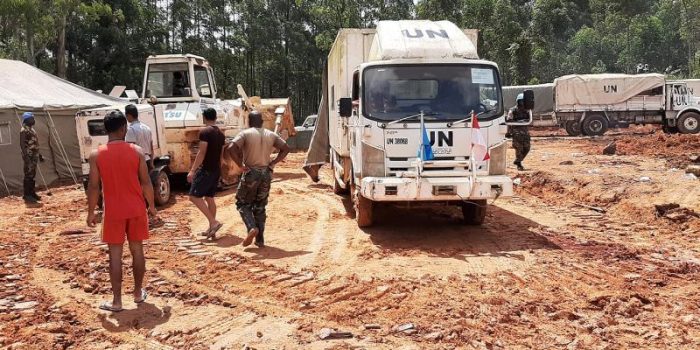
Today the UN highlighted another dangerous facet of the outbreak: 60% to 70% of deaths are occurring in the community, and not in treatment centers. Not only does this mean most Ebola patients never receive medical care, it means more family and community members are likely exposed while caring for patients.
Most patients that do seek care go to Bunia, Janabi told the UN, where health centers are becoming overrun. By the time patients reach Bunia, they are too sick for any meaningful intervention, Janabi explained.
“We have to protect Bunia now,” said Janabi, “And see how we can build centres now outside Bunia.”