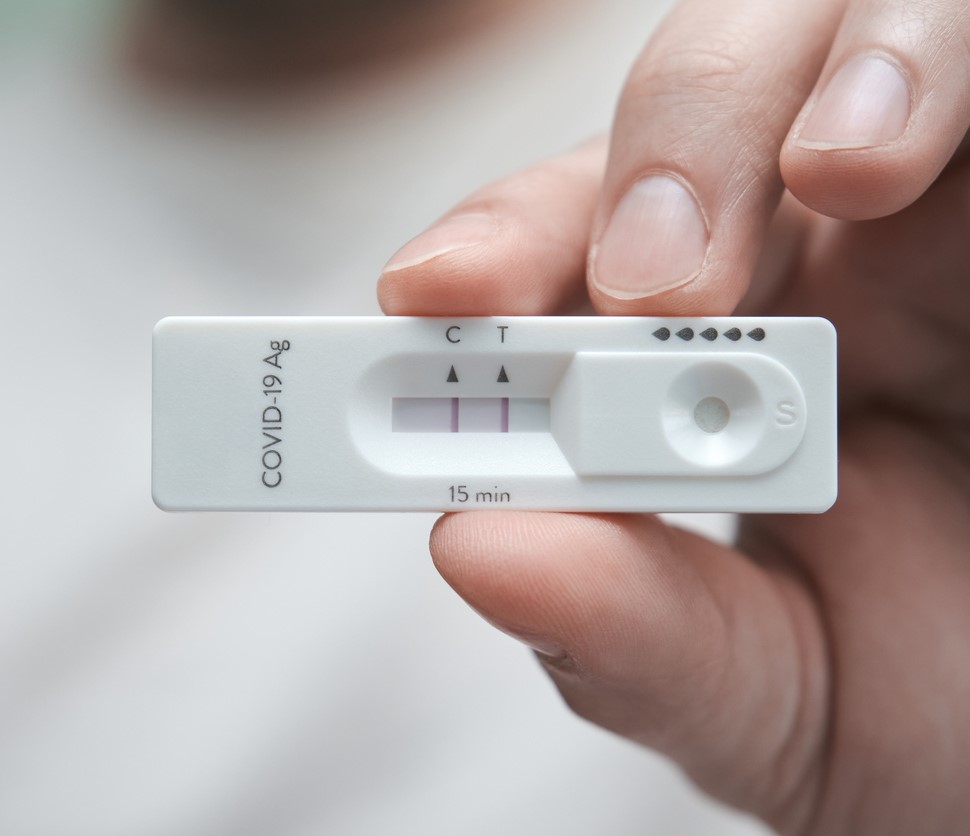
For the first time, the World Health Organization (WHO) has prequalified two rapid antigen tests for detecting COVID-19, the agency noted last week.
The tests are the SD Biosensor Standard Q COVID-19 Ag Test and the ACON Biotech Flowflex SARS-CoV-2 Antigen Rapid Test (Self-Testing). The WHO prequalification confirms that the products meet WHO standards for quality, safety, and performance. It also makes the rapid tests eligible for procurement by United Nations agencies, global health partners, and countries, which expands access in low- and middle-income countries.
Critical step for fast detection and public health response
This achievement builds on earlier regulatory milestones for these products previously listed under the WHO’s Emergency Use Listing (EUL). In September 2020, the SD test became the first-ever rapid antigen test to be listed under the WHO’s EUL, enabling its rapid deployment in more than 100 countries during the COVID-19 pandemic.
“Rapid antigen-detection tests provide results in 15–30 minutes, are affordable, and can be used outside centralized laboratories—in clinics, community sites and mobile settings—making them critical for timely detection of infectious cases and targeted public-health action,” the WHO said. “They are a vital complement to molecular (polymerase-chain reaction, or PCR) tests, particularly in resource-limited settings with limited laboratory capacity.”
Rapid antigen-detection tests provide results in 15–30 minutes, are affordable, and can be used outside centralized laboratories.
The agency notes that rapid tests are essential for detecting and controlling local outbreaks, protecting vulnerable populations and health care workers, and maintaining preparedness for future pandemics caused by respiratory diseases.

Confirmed avian flu outbreaks have hit another five US states, affecting more than 128,000 birds, according to the US Department of Agriculture’s Animal and Plant Health Inspection Service (APHIS).
And avian flu is suspected, but not confirmed, in the deaths of wild birds in central Iowa and central Florida, media outlets report.
Largest losses on Maryland broiler farm
Yesterday, APHIS documented avian flu outbreaks on a broiler breeder farm in Drew County, Arkansas (19,400 birds); a game bird farm in Jewell County, Kansas (13,100), and a backyard flock in Wabaunsee County, also in Kansas (40 birds); a broiler farm in Queen Anne’s County, Maryland (96,200 birds); a backyard flock in Washington County, Nebraska (20); and a live-bird market in Kings County, New York (4).
Also yesterday, KCCI Des Moines said the Iowa Department of Natural Resources (DNR) confirmed several cases of avian flu after dozens of dead wild birds were discovered at the Dale Maffitt Reservoir in south-central Iowa, which was closed to allow workers to remove the carcasses. The Des Moines Register reported today that the birds were roughly 200 Canada geese. But the DNR hasn’t posted a news release confirming the findings on its website.
In Florida, Orlando City Commissioner Patty Sheehan held a news conference yesterday to discuss the deaths of a dozen or more swans in downtown Orlando’s Lake Eola Park. While she speculated that avian flu could be responsible, testing has yet to be performed, and state officials haven’t issued a news release.

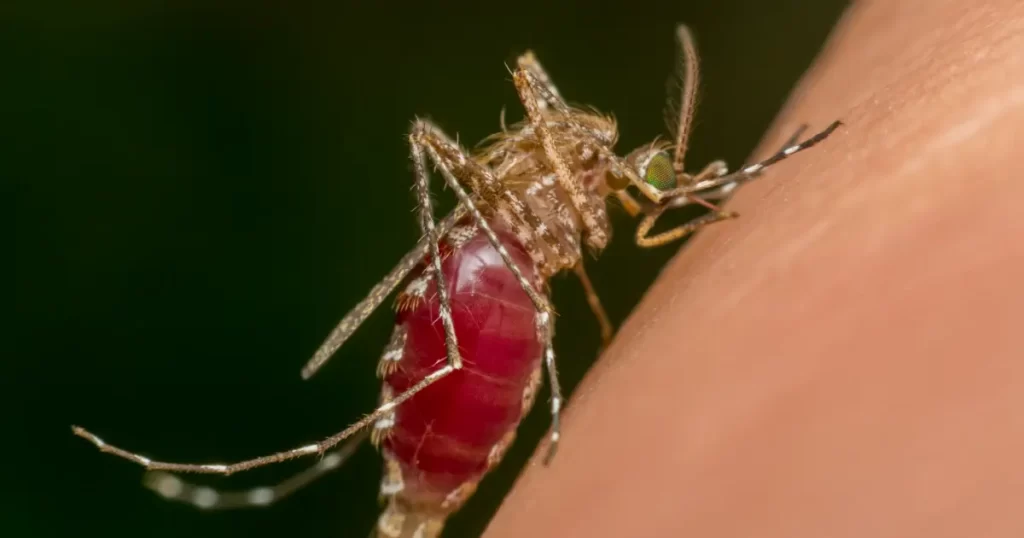
Through December 10, the world has seen more than 500,000 chikungunya cases worldwide, with almost 300,000 in the Americas region alone, the World Health Organization (WHO) reported in a risk assessment yesterday.
With a high degree of confidence, the WHO classified the risk of infection with chikungunya virus to be moderate worldwide, “driven by widespread outbreaks across multiple WHO regions during the 2025 season including areas with previously low or no transmission.”
“The resurgence and emergence of cases in new geographic areas are facilitated by the presence of competent Aedes mosquito vectors, limited population immunity, favorable environmental conditions, and increased human mobility,” the agency noted.
Chikungunya is widely distributed in tropical and subtropical regions and is characterized by sudden fever, severe joint pain, muscle pain, headache, and rash. Joint pain can persist for months or years and can lead to prolonged disability.
Almost 200 deaths
Of the 502,264 cases worldwide so far this year, 208,335 are confirmed and 293,929 suspected in 41 countries and territories. Officials logged 186 chikungunya deaths.
The resurgence and emergence of cases in new geographic areas are facilitated by the presence of competent Aedes mosquito vectors, limited population immunity, favorable environmental conditions, and increased human mobility.
By WHO region, the Americas saw 291,451 cases and 141 deaths, followed by Southeast Asia (115,985 cases, 0 deaths), Europe (56,986 and 43), Western Pacific (34,035 and 2), Africa (2,211 and 0), and Middle East (1,596 and 0). Brazil accounts for 84% of all reported cases and 82% of deaths in the Americas region, with 243,915 cases and 116 deaths.
“While the overall fatality rate is low compared to some other arboviruses, severe illness and complications can occur, especially in vulnerable populations such as newborns, young children, pregnant women, elderly individuals, and individuals with pre-existing health conditions including diabetes, hypertension [high blood pressure], and cardiovascular diseases,” the agency said.
US measles outbreak tops 2,000 known infections