Introduction
Water conservation is becoming increasingly important as global demand rises and climate conditions place pressure on freshwater systems. During Water-Saving Week, attention is often given to reducing everyday use, but technology is playing a growing role in improving how water is managed and conserved.
Smart solutions are transforming water systems by making them more efficient, responsive, and sustainable. The concept of smart water use technology highlights how innovations—from household devices to large-scale infrastructure—can reduce waste and support long-term resource protection.
How can modern technology help us use water more efficiently and secure it for future generations?
1. Smart irrigation systems reduce water waste
Agriculture and landscaping account for a significant portion of water use worldwide. Smart irrigation systems use sensors and weather data to deliver water only when and where it is needed. This reduces overwatering and improves efficiency.
These systems are especially valuable in drought-prone regions, where water conservation is critical. Studies show that precision irrigation can significantly reduce water consumption while maintaining crop productivity [1].
2. Leak detection technology prevents hidden losses
Water leaks in homes and infrastructure can lead to substantial waste over time. Smart leak detection systems use sensors to identify leaks early, allowing for quick repairs.
In urban areas, advanced monitoring systems help utilities detect and manage leaks across entire networks. Reducing these losses improves water efficiency and helps maintain stable supply systems [2].
3. Water-efficient appliances lower household demand
Modern appliances such as low-flow faucets, smart washing machines, and efficient dishwashers use less water without reducing performance. These technologies help households conserve water in daily activities.
Widespread adoption of water-efficient devices can significantly reduce overall demand, easing pressure on water systems and supporting long-term sustainability.
4. Data-driven water management improves resilience
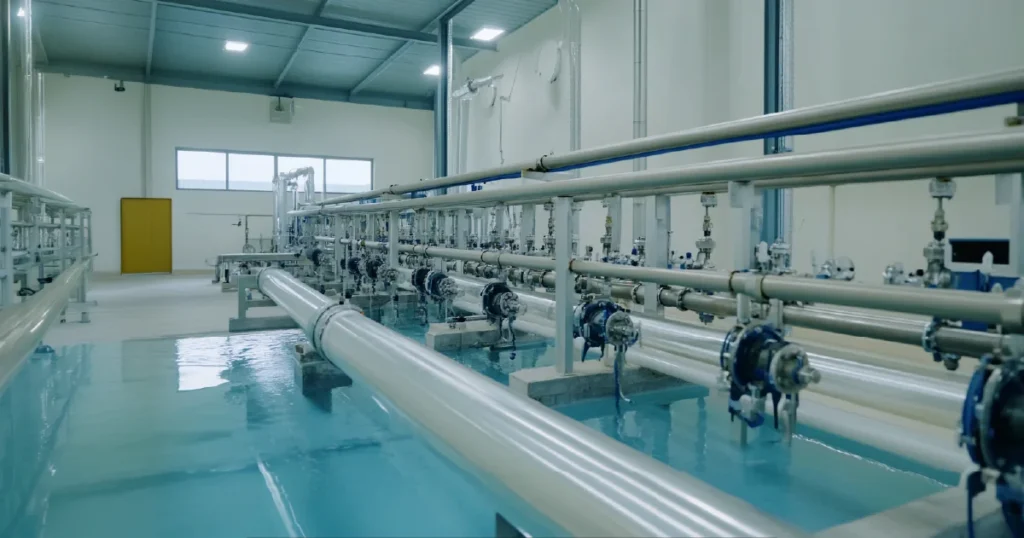
Digital tools and data analytics are transforming how water resources are managed. Real-time monitoring systems track water use, quality, and availability, enabling better decision-making.
These technologies help identify trends, predict shortages, and respond to changing conditions more effectively. As climate variability increases, data-driven management becomes essential for maintaining reliable water systems [3].
5. Sustainable infrastructure supports long-term conservation
Innovations in infrastructure, such as water recycling systems and green buildings, contribute to efficient water use. Rainwater harvesting and wastewater reuse reduce dependence on freshwater sources.
Sustainable urban design integrates these technologies to create systems that conserve water while supporting growing populations. These approaches are critical for ensuring long-term water availability.
Why smart water use technology matters
Smart water use technology is essential for addressing global water challenges. As demand increases and supply becomes less predictable, efficient management becomes a priority for achieving long-term sustainability goals [4].
Technology enables more precise use of water, reduces waste, and supports adaptation to climate-related changes. By integrating these solutions into everyday life, communities can strengthen resilience and protect water resources.
A One Health Perspective
Smart water use technology reflects the connection between environmental systems, human health, and community sustainability. Efficient water management supports sanitation, food production, and ecosystem stability, all of which influence health outcomes. Technological solutions reduce strain on natural resources while improving access to safe water. Recognizing these links helps build systems that support long-term well-being across interconnected environments.
Conclusion
Water-Saving Week highlights the importance of protecting one of the world’s most valuable resources. Smart water use technology demonstrates how innovation can support conservation efforts and improve efficiency at both individual and system levels.
From smart irrigation to data-driven management, these solutions offer practical ways to reduce water waste and strengthen resilience. As water challenges continue to grow, adopting modern technologies becomes essential for securing water for future generations.
Technology is not just improving water use—it is helping protect the future.
References
- Howell, T.A., 2016. Enhancing water use efficiency in irrigated agriculture. Agronomy Journal, 108(5), pp.1715–1725. Available at: https://doi.org/10.2134/agronj2015.0460
- Lambert, A. and Hirner, W., 2019. Losses from water supply systems: standard terminology and recommended performance measures. Water Science and Technology: Water Supply, 19(2), pp.367–374. Available at: https://doi.org/10.2166/ws.2018.060
- Rathore, M.M., Ahmad, A., Paul, A. and Rho, S., 2018. Urban planning and building smart cities based on the Internet of Things using big data analytics. Computer Networks, 101, pp.63–80. Available at: https://doi.org/10.1016/j.comnet.2015.12.023
- Colglazier, E.W., 2015. Sustainable development agenda: 2030. Science, 349(6252), pp.1048–1050. Available at: https://doi.org/10.1126/science.aad2333