Introduction
Water is one of the most essential resources for life, yet it is becoming increasingly scarce in many parts of the world. Water-Saving Week highlights the urgent need to understand how water availability is changing and why conservation is becoming critical. Population growth, climate variability, and increased demand are placing unprecedented pressure on freshwater systems.
The concept of water scarcity global risk reflects how shortages are no longer isolated events but part of a broader global trend affecting health, food security, and environmental stability. As water resources decline, the consequences extend beyond access—they influence entire systems that support life.
How close are we to a future where water scarcity becomes one of the most significant global risks?
1. Over 2 billion people live under water stress
More than 2 billion people currently live in countries experiencing high water stress, where demand exceeds available supply [1]. This number is expected to rise as populations grow and water use increases. Regions already facing shortages are becoming more vulnerable to long-term scarcity.
2. Climate change is intensifying drought patterns
Rising global temperatures are altering rainfall patterns, increasing the frequency and severity of droughts. Warmer climates lead to higher evaporation rates, reducing water availability in already dry regions. These changes are making water scarcity global risk more difficult to manage [2].
3. Agriculture consumes the majority of freshwater
Agriculture accounts for approximately 70% of global freshwater use [3]. As food demand increases, so does pressure on water resources. Inefficient irrigation and water-intensive crops contribute to depletion, especially in regions with limited supply.
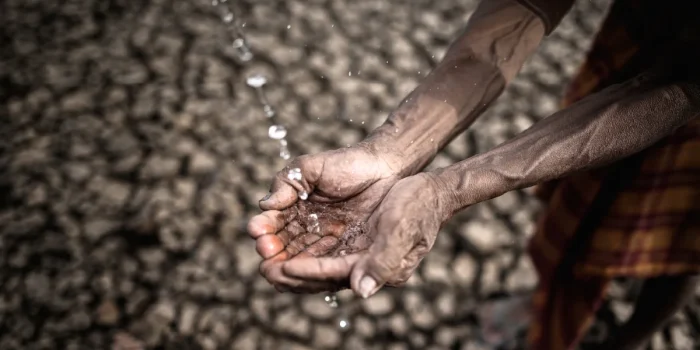
4. Water scarcity affects human health directly
Limited access to clean water increases the risk of infectious diseases, poor sanitation, and malnutrition. Communities without reliable water sources are more vulnerable to outbreaks and long-term health issues. Water scarcity is therefore closely linked to public health outcomes [4].
5. Urban populations are facing growing water shortages
Rapid urbanization is increasing demand for water in cities worldwide. Infrastructure often struggles to keep up, leading to shortages, reduced water quality, and unequal access. As cities expand, managing water scarcity becomes more complex.
6. Ecosystems are under increasing pressure
Water scarcity affects not only human populations but also ecosystems. Rivers, wetlands, and lakes are shrinking, disrupting habitats and biodiversity. Loss of these ecosystems reduces natural water filtration and increases environmental instability.
7. Future demand may exceed supply by 40%
Global projections indicate that water demand could exceed supply by up to 40% by 2030 if current trends continue [5]. This gap highlights the urgency of conservation and more efficient water use across all sectors.
Why water scarcity global risk is increasing
Water scarcity global risk is driven by a combination of environmental and human factors. Climate change reduces water availability, while population growth and economic development increase demand. At the same time, pollution and inefficient use limit the amount of usable water.
These overlapping pressures create a cycle where scarcity becomes more difficult to reverse. Without intervention, water shortages may become more frequent and severe, affecting multiple regions simultaneously.
A One Health Perspective
Water scarcity global risk reflects the interconnected nature of human, environmental, and community health. Limited water availability affects sanitation, food production, and ecosystem stability, increasing health risks across populations. Environmental degradation reduces water quality, while human demand places additional strain on resources. Addressing water scarcity requires recognizing these connections and supporting systems that protect both natural resources and human well-being.
Conclusion
Water-Saving Week serves as a reminder that water scarcity is not a distant issue—it is a growing global challenge. The water scarcity global risk is increasing due to climate change, population growth, and rising demand, affecting health, food systems, and environmental stability.
Understanding these alarming facts highlights the urgency of conservation and responsible water use. Small changes at individual and community levels can contribute to long-term solutions.
Protecting water resources today is essential for ensuring a stable and sustainable future.
References
- Mekonnen, M.M. and Hoekstra, A.Y., 2016. Four billion people facing severe water scarcity. Science Advances, 2(2), e1500323. Available at: https://doi.org/10.1126/sciadv.1500323
- Cook, B.I., Mankin, J.S. and Anchukaitis, K.J., 2018. Climate change and drought: From past to future. Current Climate Change Reports, 4(2), pp.164–179. Available at:
https://doi.org/10.1007/s40641-018-0093-2 - Food and Agriculture Organization (FAO), 2020. Water use in agriculture. Available at: https://www.fao.org/aquastat/en/overview/methodology/water-use
- World Health Organization (WHO), 2022. Drinking water. Available at: https://www.who.int/news-room/fact-sheets/detail/drinking-water
- 2030 Water Resources Group, 2009. Charting our water future. Available at:
https://www.mckinsey.com/capabilities/sustainability/our-insights/charting-our-water-future