Today the first participants were enrolled in a trial testing Gilead Sciences’ experimental antiviral drug obeldesivir as post-exposure prophylaxis (PEP, for preventing disease) for the ongoing Bundibugyo Ebola outbreak in the Democratic Republic of the Congo (DRC).
The trial, called EBO-PEP, is being conducted in Ituri province, the epicenter of the outbreak, and is being run by the National Institute for Biomedical Research in Kinshasa and several humanitarian partners. It comes as Ebola cases in the region approach 2,000.
For the trial, researchers aim to enroll nearly 1,000 participants, who are being recruited outside Ebola treatment centers in Ituri. “Participants, adults or children over the age of 12, must have been in direct contact with a confirmed case (a sick person shedding the virus, a corpse, or a needle-stick injury caused by a contaminated syringe) within the preceding five days, and must not be showing any signs or symptoms of the disease,” according to a news release.
Each participant will be monitored daily for 21 days, with a final visit at 42 days.
If successful, the EBO-PEP trial could establish post-exposure prophylaxis as a game-changing approach for preventing Ebola disease.
“If successful, the EBO-PEP trial could establish post-exposure prophylaxis as a game-changing approach for preventing Ebola disease among people who have been exposed to the virus. Combined with strong community engagement and effective contact tracing, it could provide an important new way to save lives and help bring outbreaks under control,” said World Health Organization Director-general Tedros Adhanom Ghebreyesus, PhD.
There are no targeted treatments or vaccines for Bundibugyo Ebola, and contact tracing has proven difficult in the conflict-ridden zone where the outbreak is taking place. A PEP strategy could offer a new hope to ending the outbreak.
Ebola total reaches 1,984 cases
As of today, BNO News is reporting the outbreak stands at 1,984 cases and 721 deaths. At least 608 deaths and 1,772 cases have occurred in Ituri province, according to a report from the European Centre for Disease Prevention and Control.
Of the total cases, 37 are new, as are 17 deaths. All but 21 cases and two deaths have been in the DRC, with one case in France and 20 cases and two deaths in Uganda.
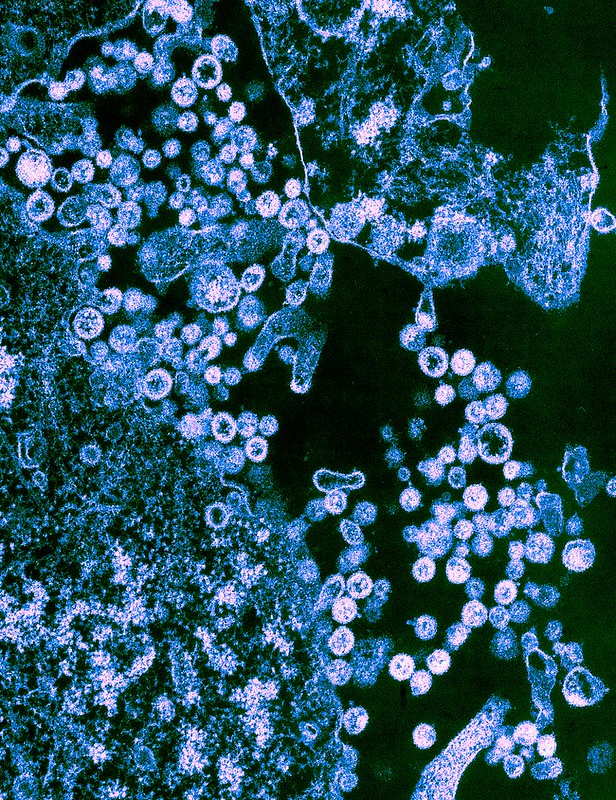
Nigeria has recorded 221 deaths from Lassa fever since the beginning of the year, now surpassing the 190 fatalities recorded last year, officials from the Nigeria Centre for Disease Control and Prevention (NCDC) announced yesterday.
The Lassa fever outbreak has spread to 23 of the nation’s 36 states, with 31 new cases recorded in the past week alone. The case-fatally rate (CFR) of this outbreak is now 24%, the NCDC said, with young adults ages 21 to 30 the most affected. During the same period last year, the CFR was only 19%.
The NCDC has confirmed 922 Lassa fever cases so far this year, up from 790 infections in the same period in 2025.
Nigerian officials declared the outbreak a national public health emergency in January 2019. The viral hemorrhagic illness is transmitted to humans primarily through contact with the urine or feces of infected rats.

Fewer patients went to US emergency departments (EDs) because of infections with a dangerous bacterium called Clostridioides difficile, or C difficile, from 2014 to 2024, according to a study last week in the American Journal of Infection Control.
C difficile infection (CDI), which causes severe, watery diarrhea and inflammation of the colon, can be deadly. Doctors diagnose almost half a million cases a year. Most infections occur while or after taking antibiotics.
Researchers found that the overall incidence of CDI declined from 2.94 per 1,000 ED visits to 2.07 per 1,000 visits, a relative decline of 30%. Although cases decreased among older adults, C difficile incidence jumped 59% among people aged 18 to 24, according to an analysis of 38 million ED visits and nearly 150,000 cases.
Although many patients become infected with C difficile while in the hospital, a growing number of people in recent years have developed the infection outside the hospital.
Changes in treatment
ED staff also changed the way they treated C difficile during this time.
Prescriptions for an antibiotic called metronidazole fell from 66% to 30%, reflecting changes in recommendations from the Infectious Diseases Society of America and Society for Healthcare Epidemiology of America. In 2017, those groups suggested that clinicians prescribe oral vancomycin, rather than metronidazole, the traditional choice. In 2021, the groups updated their guidelines to recommend an antibiotic called fidaxomicin when available.
Vancomycin use increased by more than 80% over the 10-year period of the study. Use of fidaxomicin accelerated after 2021.
The continuing use of metronidazole suggests that emergency department staff aren’t following medical guidelines closely enough, according to the study, conducted by researchers from the University of Colorado, Anschutz Medical Campus, Aurora, and Denver Health Medical Center.
“Together, these prescribing trends illustrate a maturing stewardship landscape in which outdated therapies decline and guideline-supported options gain traction, but substantial work remains to close remaining gaps,” they wrote.
How to prevent New World screwworm infestations in cats and dogs