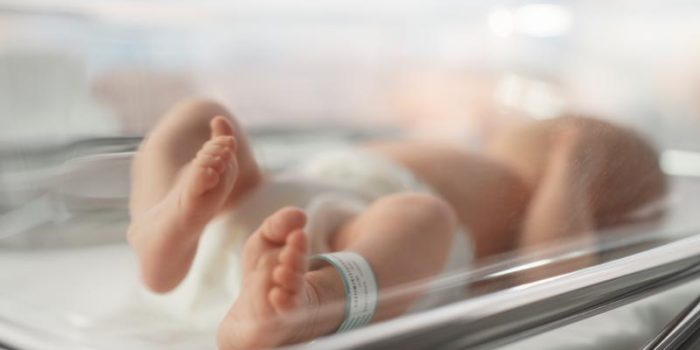
One immunization may protect newborns against two serious illnesses, according to a new study from France.
An injection called nirsevimab, which dramatically reduces a baby’s risk of being hospitalized with respiratory syncytial virus (RSV), also appears to reduce the risk of a life-threatening bacterial infection called invasive pneumococcal disease.
Nirsevimab, sold under the brand name Beyfortus, was approved by the Food and Drug Administration (FDA) in 2023 only to prevent RSV.
But a new French study finds that newborns given nirsevimab were 36% less likely to be hospitalized for an invasive form of pneumococcal disease than other babies. The study, published this week in The Lancet Infectious Disease, analyzed more than half a million medical records from the French National Health Data System.
The study involved nearly 530,000 babies born from February 6, 2023, to January 31, 2024. Nearly 120,000 infants, or 23%, received nirsevimab. Seventeen of the immunized babies (14.2 per 100,000) developed invasive pneumococcal disease within six months of treatment, compared with 95 of the non-immunized newborns (23.3 per 100,000).
The protective effected lasted at least nine months, according to an additional analysis. Six of the non-immunized babies died. There were no deaths among immunized newborns.
2 fearsome diseases
In healthy adults, RSV often causes symptoms similar to those of the common cold. In babies and older adults, however, RSV can cause serious disease. Before the approval of RSV immunizations, the virus was the leading cause of hospitalization during a baby’s first year of life. Up to 80,000 US children under 5 years old were hospitalized from RSV each year.
Research shows that nirsevimabreduces the risk that babies with RSV will be admitted to the hospital for intensive care by 80%.
Although nirsevimab is injected, it is not a vaccine. Instead, it’s a collection of ready-made antibodies that help babies defend against RSV right away.
Pneumococcal disease, which kills nearly 300,000 children under 5 years annually worldwide, is caused by a bacterium called Streptococcus pneumoniae.
While mild pneumococcal infections can cause pink eye, sinus infections, and earaches, more serious cases can lead to pneumonia, a lung infection that often needs to be treated in the hospital. In the worst cases, bacteria invade the bloodstream, which can lead to meningitis, an inflammation of the protective lining around the brain and spinal cord, or sepsis, the body’s extreme, life-threatening reaction to infection.
Thanks to a vaccine called Prevnar, cases of invasive pneumococcal disease in children have fallen by 90% since 2010. While the vaccine originally protected against seven types of bacteria that cause pneumococcal disease, Prevnar now prevents infection with 20 bacterial types.
But children continue to develop pneumococcal disease due to subtypes of the bacteria not included in the vaccine, the authors of the new study note.
Bacterial infections often follow viral infections
The study authors wrote that they decided to conduct their research because of evidence showing that babies with RSV have a higher risk of developing invasive pneumococcal disease.
That’s not totally surprising, given that other respiratory viruses, including influenza and COVID-19, can leave people vulnerable to secondary bacterial infections, including pneumonia, said Robert Hopkins, MD, medical director of the National Foundation for Infectious Diseases.
The measles vaccine can also protect children from other diseases, said Sean O’Leary, MD, MPH, a spokesman for the American Academy of Pediatrics. That’s because measles can wipe out children’s immune system, leaving them vulnerable to infections for which they were previously immune, either because of vaccination or natural infection.
In a commentary accompanying the new study, Spanish researchers Olaia Pérez-Martínez, MD, and Susana Monge, MD, PhD, MPH, wrote that scientists don’t yet fully understand how RSV predisposes babies to pneumococcal disease. Studies show that RSV causes inflammation and makes it harder for the body to get rid of bacteria.
Hopkins said that the study’s findings need to be confirmed with additional research, as with any new finding.
That’s especially true for this study, “because of the small number of invasive pneumococcal infections and the fact that, to date, this has only been demonstrated in a single study,” Hopkins said.
Unanswered questions
Nirsevimab is one of several new products to prevent RSV.
The FDA approved a similar antibody injection called clesrovimab, sold under the brand name Enflonsia, in 2025.
The FDA also approved an RSV vaccine, called Abrysvo, for pregnant people in weeks 32 to 36 of pregnancy in 2023. All three immunizations have been found to be very effective.
The new study did not include clesrovimab or Abrysvo. The study authors note that it will be important to study other RSV immunizations to learn if they also protect against invasive pneumococcal disease.