Introduction
A generation ago, many breast cancer diagnoses relied on limited imaging tools and treatment options that often followed a one-size-fits-all approach. Today, researchers are entering an era where artificial intelligence can help identify tumors, blood tests may detect cancer before symptoms appear, and treatments can be tailored to the unique genetic profile of each patient. The rapid pace of Breast Cancer Breakthroughs is transforming both scientific understanding and clinical care.
World Breast Cancer Research Day highlights the importance of innovation in the fight against one of the most common cancers worldwide. While breast cancer continues to affect millions of people each year, advances in research are improving survival rates and creating new possibilities for earlier detection and more effective treatment. Scientists are increasingly focused not only on treating cancer but also on identifying it sooner and preventing recurrence.
How could Breast Cancer Breakthroughs reshape the future of cancer care over the next decade?
Breast Cancer Breakthroughs and Earlier Detection
One of the most promising areas of research involves detecting cancer at its earliest stages. Early diagnosis significantly improves treatment options and survival outcomes.
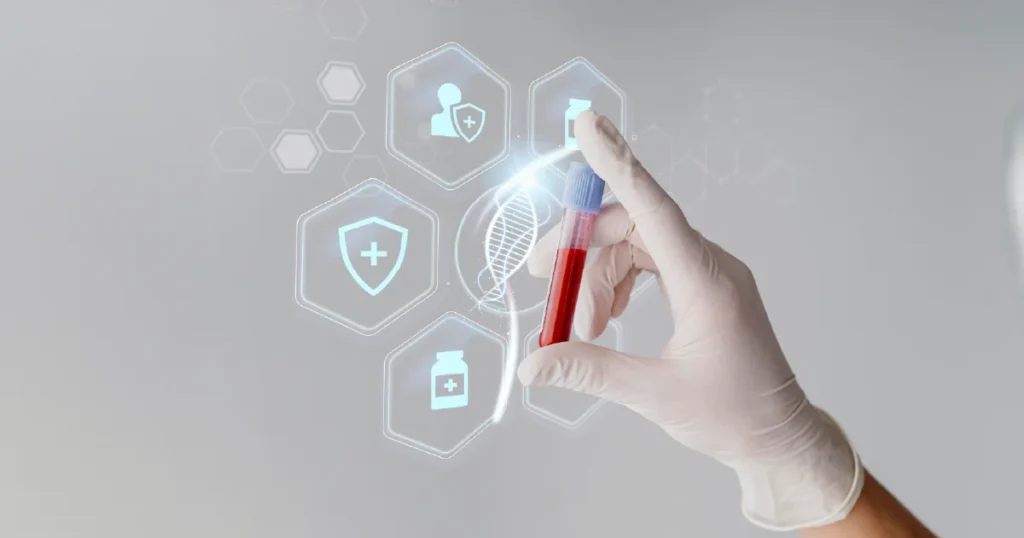
Researchers are increasingly exploring liquid biopsies, which analyze fragments of tumor DNA circulating in the bloodstream. Unlike traditional biopsies, these tests require only a blood sample and may eventually help identify cancer before it becomes visible through conventional imaging [1].
Scientists believe that liquid biopsy technologies could become a major component of future cancer screening and monitoring programs.
Artificial Intelligence Is Changing Diagnosis
Artificial intelligence is rapidly becoming one of the most influential tools in cancer research. AI systems can analyze mammograms and medical images with remarkable speed and accuracy.
A landmark international study demonstrated that AI-assisted screening could improve breast cancer detection while reducing false-positive and false-negative findings [2]. These technologies are designed to support radiologists rather than replace them, helping clinicians identify subtle abnormalities that might otherwise be overlooked.
As machine learning systems continue to improve, AI may become an increasingly valuable partner in cancer diagnosis.
Personalized Treatment Through Tumor Profiling
Breast cancer is not a single disease. Different tumors may behave differently depending on their genetic and molecular characteristics.
Advances in genomic sequencing now allow clinicians to examine the biological profile of individual tumors and select therapies that are more likely to be effective [3]. This personalized approach can improve treatment outcomes while helping reduce unnecessary side effects.
Researchers continue to discover new biomarkers that may help predict treatment response and guide clinical decision-making.
The Emerging Potential of Cancer Vaccines
Among the most exciting developments in oncology is the possibility of cancer vaccines. Unlike traditional vaccines that prevent infectious diseases, these therapies aim to train the immune system to recognize and attack cancer cells.
Several early-stage clinical studies are exploring vaccine-based approaches for breast cancer, particularly in high-risk patients and those with aggressive tumor types [4]. Although much work remains before widespread implementation, researchers view this field as one of the most promising frontiers in cancer treatment.
The goal is not simply to treat cancer more effectively but to prevent recurrence and improve long-term outcomes.
A One Health Perspective
The concept of Breast Cancer Breakthroughs aligns with the broader One Health perspective by recognizing that health outcomes are influenced by interconnected biological, environmental, technological, and social factors.
Researchers continue to investigate how environmental exposures, genetics, lifestyle factors, and healthcare access contribute to cancer risk and outcomes. At the same time, advances in artificial intelligence, molecular biology, and precision medicine are creating opportunities to improve prevention and treatment.
Conclusion
World Breast Cancer Research Day reminds us that some of the most important advances in medicine begin with scientific curiosity and innovation. The rapid pace of Breast Cancer Breakthroughs is changing how cancer is detected, monitored, and treated.
From liquid biopsies and artificial intelligence to personalized therapies and cancer vaccines, researchers are developing tools that may transform outcomes for future generations. While challenges remain, the direction of research offers growing reason for optimism.
The future of breast cancer care is no longer defined solely by treatment. Increasingly, it is being shaped by earlier detection, greater precision, and the possibility of preventing disease progression before it begins.
References
- Ignatiadis, M., Sledge, G.W. and Jeffrey, S.S., 2021. Liquid biopsy enters the clinic — implementation issues and future challenges. Nature Reviews Clinical Oncology, 18, pp.297–312.
https://doi.org/10.1038/s41571-020-00457-x - McKinney, S.M. et al., 2020. International evaluation of an AI system for breast cancer screening. Nature, 577, pp.89–94.
https://doi.org/10.1038/s41586-019-1799-6 - Polyak, K., 2011. Heterogeneity in breast cancer. Journal of Clinical Investigation, 121(10), pp.3786–3788.
https://doi.org/10.1172/JCI60534 McKinney, S.M. et al., 2020. International evaluation of an AI system for breast cancer screening. Nature, 577, pp.89–94.
https://doi.org/10.1038/s41586-019-1799-6 - Valckx, S. et al., 2023. Immunotherapy in breast cancer: an overview of current strategies and perspectives. npj Breast Cancer, 9, Article 33.
https://doi.org/10.1038/s41523-023-00508-3