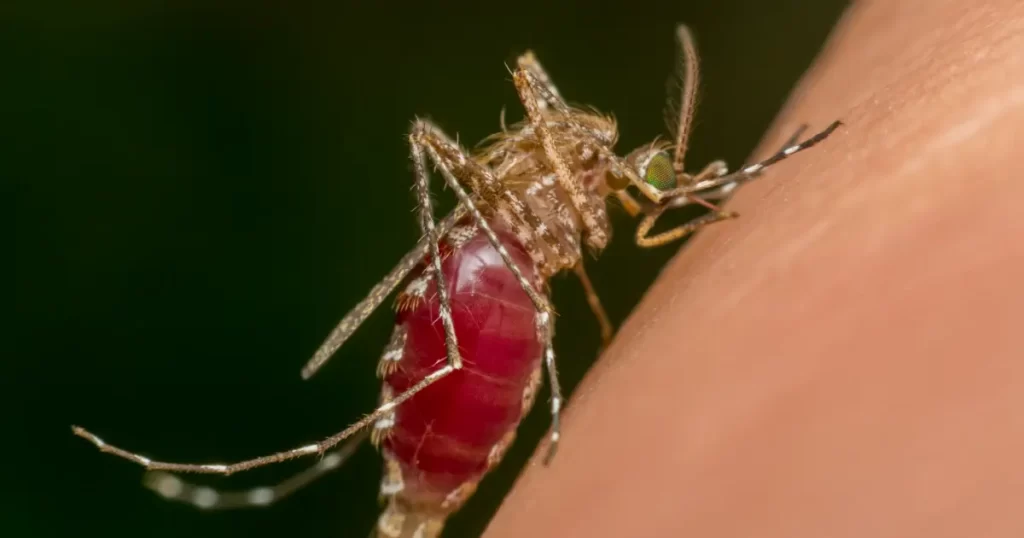
The risk of Guillain-Barre syndrome (GBS) after confirmed dengue infection is similar to that after infection with established viral or bacterial triggers such as influenza or Campylobacter jejuni, per a letter to the editor published this week in the New England Journal of Medicine.
The letter, by UK and Brazilian researchers, described an analysis of linked national databases with information on hospitalizations, dengue notifications, and deaths in Brazil in 2023 and 2024.
Dengue is a fast-spreading mosquito-borne illness. GBS is a rare autoimmune disease in which the immune system attacks the peripheral nerves, which connect the brain and spinal cord to the rest of the body.
The team used a self-controlled case-series model to estimate GBS incidence rate ratios (IRRs) from a risk window of one to 42 days after dengue symptom onset compared with a control period of 43 days post-onset through December 2024.
Greatest risk in first 2 weeks after symptom onset
Of 5,055 hospitalizations for GBS, 147 included a dengue diagnosis; in 89 of those cases, hospitalization occurred within the risk window. The IRR during the risk window, compared with the control period, was 16.75.
Given the recent large-scale outbreaks of dengue in regions where dengue is endemic, dengue-related Guillain-Barre syndrome may represent a substantial and underrecognized component of the neurologic burden attributable to the disease.
The risk was greatest in the first two weeks, returning to baseline by 43 days. The attributable risk from one to 42 days was 35.5 excess GBS cases per million dengue infections. Therefore, the risk of GBS after dengue infection appears comparable to that of influenza (IRR, 16.6) and C jejuni (odds ratio, 3 to 41).
Studies in tropical regions such as Brazil, India, and Malaysia suggest that arboviral infections such as dengue may be more common GBS triggers than C jejuni and enteroviruses in those settings, the authors noted.
“Given the recent large-scale outbreaks of dengue in regions where dengue is endemic, dengue-related Guillain-Barre syndrome may represent a substantial and underrecognized component of the neurologic burden attributable to the disease,” they wrote. Clinicians in dengue-endemic areas should consider GBS in patients with progressive weakness during or shortly after dengue infection to enable early treatment, they added.
An outbreak of a mystery illness in Burundi, a landlocked country located in Africa’s Great Lakes Region, has killed at least five people and sickened 35 others since March 30—a case-fatality rate of 14%.
Symptoms include fever, vomiting, diarrhea, headache, and dark urine, according to the Africa Centres for Disease Control and Prevention (Africa CDC). In severe cases, people may display neurologic symptoms, anemia (low red blood cells), jaundice, and difficulty breathing.
Testing showed that samples from patients tested negative for more than 200 pathogens, said Yap Boum, PhD, MPH, deputy head of the Africa CDC Mpox Response. This includes Ebola and Marburg virus diseases, Rift Valley fever, yellow fever, and Crimean-Congo hemorrhagic fever.
Investigating potential zoonotic transmission
Boum said public health workers are also doing animal testing, including on pigs and cattle, to determine if a pathogen has potentially jumped from an animal to a human.
“All the necessary measures are being taken to safeguard public health and prevent potential spread of infection,” said Dr Lydwine Badarahana, Burundi’s Minister of Health, in an April 11 press release posted by the World Health Organization (WHO).
The WHO says it is supporting Burundi’s health ministry to strengthen disease surveillance, field investigation, clinical care, laboratory diagnosis, and infection prevention and control. It has also facilitated the shipment of samples to the National Institute of Biomedical Research, located in the neighboring Democratic Republic of the Congo, for further analysis.
Eye symptoms may signal higher-severity long COVID
Vampire bats in Mexico may feed on CWD-positive deer, spreading disease and posing species-jump threat
New research highlights strong benefits of HPV vaccines beyond cervical cancer