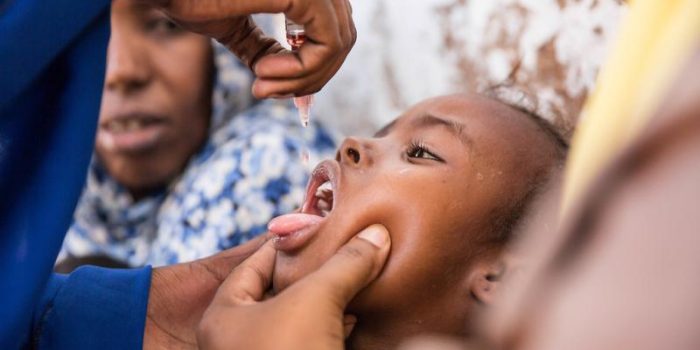
An economic analysis published last week in The Lancet Global Health suggests that one of the world’s most ambitious public health initiatives has also been a financial and public health success.
The World Health Organization’s (WHO’s) Expanded Programme on Immunization (EPI) generated roughly $16 in economic benefits for every $1 spent from 1974 to 2024, write researchers led by a team at Peking University School of Public Health. In addition, they estimate that vaccination has prevented some 154 million deaths, nearly all of them in children younger than 5 years, and has accounted for 40% of the global reduction in infant mortality.
The findings arrive amid growing uncertainty around funding for global immunization. In 2025, several high-income countries announced cuts to organizations such as the WHO and Gavi, the Vaccine Alliance. This change in the funding landscape makes quantifying EPI’s economic value particularly important, write the researchers.
Efforts averted $15 trillion in productivity losses
WHO launched EPI in 1974 to expand access to vaccines and reduce preventable deaths around the world. To mark the program’s 50th anniversary, the researchers evaluated the economic impact of immunizations against measles, influenza, meningitis, polio, diphtheria, pertussis, hepatitis B, pneumonia, rotavirus, rubella, tetanus, tuberculosis, Japanese encephalitis, and yellow fever, across all 194 WHO member states.
The measles vaccine averted more than 93,000 deaths and saved $12.8 trillion in lost productivity.
The team compared the costs of vaccination with a hypothetical scenario in which no vaccines had been administered. The findings suggest that global immunization efforts between 1974 and 2024 cost $937 billion. But those expenditures were offset by an estimated $15.05 trillion in avoided productivity losses caused by vaccine-preventable deaths, resulting in an overall benefit-cost ratio (BCR) of 16.06—or roughly $16 in economic returns for every dollar invested.
Every WHO member country experienced cost savings, but the impact was even greater in less-resourced areas of the world. In low-income countries, the findings suggest a BCR of 23.63, compared with 14.8 in high-income countries. The Eastern Mediterranean region had the highest BCR of all WHO regions, at 17.22.
Measles vaccine saved $74 for every $1 invested
Of the 14 immunizations the researchers examined, measles vaccination produced the largest economic benefit, with a BCR of 73.97, or nearly $74 dollars saved for every dollar invested. The researchers estimate that the measles vaccine averted more than 93,000 deaths and saved $12.8 trillion in lost productivity.
Five other vaccines showed strong economic results: pertussis (10.18), tetanus (5.94), polio (5.51), tuberculosis (5.07), and Haemophilus influenzae type b (1.83). The researchers note that economic returns have declined somewhat in recent years, but the return on investment remains significant. From 2000 to 2024, the global average BCR was an estimated 7.53. In 2024, global BCR was an estimated 4.89.
The study has some limitations. It excluded some vaccines, like human papillomavirus (HPV), and it focused only on mortality burden, excluding expenses like treatment costs and loss of caregiver wages associated with disease cases—both of which are likely to have led to an underestimation of EPI’s full public health impact.
The authors argue that the results provide strong evidence for continued investment in vaccination programs and vaccine price reductions, particularly in lower-income countries where economic returns remain highest.