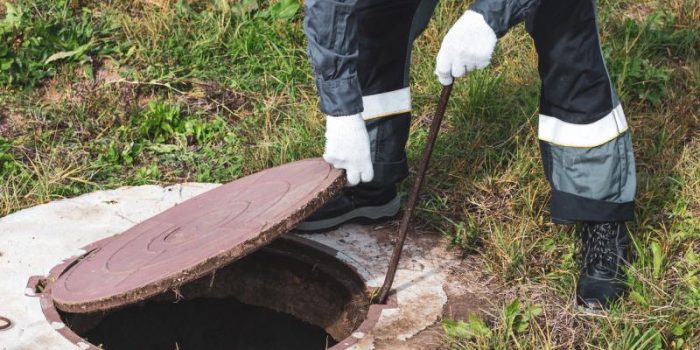
Wastewater surveillance in New Mexico last year detected the measles virus at the county level at least five days before any clinically confirmed cases.
As researchers detailed in a study published on Wednesday in JAMA Network Open, this monitoring can provide public health agencies with early warning of measles that is independent of people seeking medical care.
These findings come as measles, a potentially deadly and extremely contagious airborne virus, continues to spread throughout the United States and globally.
Wins and limitations
The New Mexico Department of Health (NMDOH) collected a weekly 125-milliliter sample of untreated wastewater from nine treatment plants across six counties: Luna, Chaves, Santa Fe, Sandoval, Bernalillo, and Dona Ana. The Stadler Laboratory at Rice University tested the samples and returned the results to NMDOH within 10 days.
The study got its first hit on May 7, 2025, when a wastewater sample collected in Sandoval County on April 30 tested positive for measles. At that time, none of the 67 reported cases in New Mexico were from Sandoval County or its neighboring counties. But the sampling proved predictive: Within a week, two Sandoval County residents tested positive for measles.
Then, in June, wastewater from Luna County tested positive for measles. Cases among county residents started to emerge 12 days later. In total, 14 individuals were infected with the virus, five of whom were detained at the Luna County Detention Center. Carceral settings are high-risk environments for infectious disease outbreaks.
Wastewater was also found positive in Chaves County during the study, though no cases followed.
Researchers note that wastewater monitoring has limitations. The surveillance does not cover septic tanks, which are privately owned and not part of public sewer systems. Also, the presence of measles in wastewater might be due to an infectious person passing through the county.
Measles continues to spread in the United States
Elsewhere in the southwest, three more Maricopa County residents have the measles, bringing Arizona’s 2026 case count to 96. Mesa County, the fourth-most populous county in the United States, now has 13 confirmed cases this year. According to the Maricopa County Department of Public Health, the infected individuals visited at least 10 locations around the city of Mesa, including a church, a barbershop and a half-dozen restaurants.
When an infected person coughs or sneezes, the virus can linger in the air and on surfaces for up to two hours.
In Austin, Texas, people may have been exposed to measles when an infected person visited St. David’s Emergency Center on Monday, May 4, from 11 a.m. – 1:30 p.m. The city’s health department says that this is the first reported case for Travis County in 2026.
An entire audience at the Metropolitan Opera House in New York City was put at risk for measles during an April 25 matinee of La Bohème, according to several news outlets. The infected person was unvaccinated.
The nationwide measles total for the year now stands at 1,842 cases, up from 1,814 the previous week, according to an update today from the Centers for Disease Control and Prevention. There have been 25 outbreaks reported in 2026, and 93% of confirmed cases are outbreak-associated. An outbreak is defined as three or more cases.
Among all confirmed measles patients, 92% are unvaccinated or have unknown vaccination status, and 4% have received only one dose of the measles, mumps, rubella vaccine.
Ongoing outbreak in Bangladesh
While the current vaccination rate in the United States is relatively high, an ongoing measles outbreak in Bangladesh that began in mid-March serves as a grave warning. At least 12 more children have died in the past day, bringing the total number of pediatric deaths to 336, according to reporting in The Telegraph Online.
An April bulletin from the United Nations Children’s Fund (UNICEF) notes that kids under the age of 5 are disproportionately affected by the outbreak and that “Most cases are among unvaccinated or under-vaccinated children.”
A nationwide measles-rubella vaccination campaign led by the World Health Organization (WHO) began last month. The WHO notes that before the outbreak, Bangladesh had made “substantial progress towards measles elimination,” but vaccination rates have declined partly due to shortages of the vaccine, which is 97% effective after two doses.