Introduction
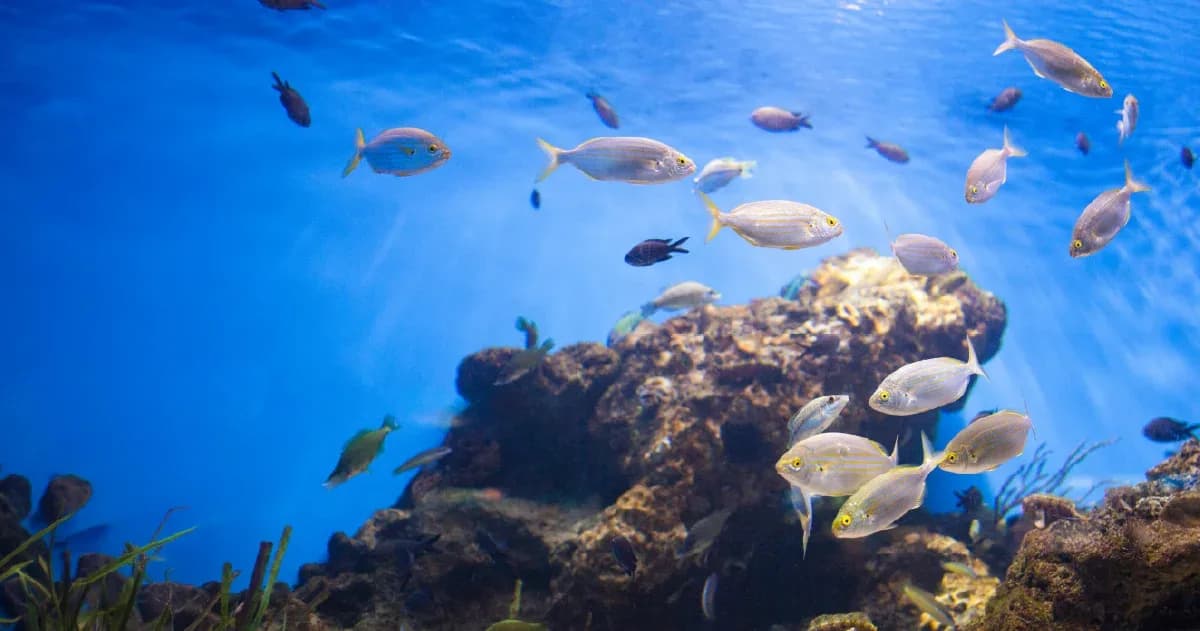
Every fish brought to shore tells a larger story. Behind the catch is an ecosystem of predators and prey, coastal habitats, ocean currents, fishing communities, food markets, and millions of people who depend on aquatic foods for nutrition and livelihoods. Sustainable Fisheries depend on keeping these relationships in balance.
Observed each year on November 21, World Fisheries Day recognizes the contribution of fisheries to food security, employment, and sustainable development. It also highlights a growing challenge: meeting human needs without weakening the aquatic ecosystems that make fisheries possible.
Can we continue feeding the world from our oceans without compromising the ecosystems that make that food possible?
Sustainable Fisheries Begin with Healthy Ecosystems
Fish populations do not exist in isolation. Their survival depends on complex relationships involving plankton, predators, prey, coral reefs, mangroves, seagrass beds, estuaries, and changing ocean conditions.
When fish are removed faster than populations can reproduce, food webs and ecological relationships can become less stable. FAO's 2025 global assessment found that 64.5% of assessed marine fishery stocks were within biologically sustainable levels, while 35.5% were classified as overfished [1].
The same assessment showed that fisheries under effective, science-based management often perform substantially better. Protecting stocks, habitats, and ecological processes can allow fisheries to remain productive while supporting long-term ecosystem resilience.
The Global Importance of Fisheries
The scale of global dependence on aquatic systems is enormous. FAO reports that fisheries and aquaculture production reached a record 235 million tonnes in 2024, including 195 million tonnes of aquatic animals [2].
Capture fisheries contributed about 92 million tonnes, while the wider aquatic food sector supports more than 600 million livelihoods worldwide [2]. These numbers represent coastal economies, traditional cultures, local markets, and communities whose relationship with aquatic ecosystems may stretch back generations.
When fish populations decline, the effects can move quickly from the water into households, economies, and food systems.
Fish, Nutrition, and Human Health
Aquatic foods are also important for global nutrition. In 2024, nearly nine-tenths of aquatic animal production was destined for human consumption, and aquatic foods supplied at least one-fifth of animal protein intake for approximately 3.1 billion people [2].
Fish can provide high-quality protein, omega-3 fatty acids, vitamin B12, iron, zinc, calcium, and other important nutrients. Research has highlighted the diversity of aquatic foods and their potential to improve nutrient availability and support healthier diets [3].
Protecting fisheries therefore means protecting a food resource that contributes directly to human health, especially where fish is an accessible and culturally important part of the diet.
Climate Change Is Reshaping the Catch
Even well-managed fisheries face a growing challenge: climate change. Warming seas are altering species distributions, habitats, migration patterns, and marine productivity.
Research examining marine populations across multiple ecosystems has shown that ocean warming has already influenced fisheries productivity, although effects vary among species and regions [4]. Some populations may shift toward cooler waters while others face declining habitat quality or changing food availability.
Future fisheries management will therefore need to respond not only to fishing pressure but also to rapidly changing environmental conditions.
A One Health Perspective
The idea of Sustainable Fisheries reflects the One Health principle that environmental, animal, and human health are connected.
Healthy aquatic ecosystems support fish populations. Sustainable fish populations support nutrition and livelihoods. Coastal communities, in turn, depend on resilient ecosystems for food security and economic stability.
A One Health approach encourages fisheries scientists, ecologists, public health professionals, policymakers, and fishing communities to consider these relationships together rather than treating them as separate challenges.
Aquatic animal health and welfare matter alongside sustainable fish populations. In practice, One Health means coordinating habitat and water-quality protection, aquatic-animal disease prevention, food safety and support for fishing communities. Fisheries managers, aquatic-animal health professionals, environmental authorities and public-health teams each have a role.
Conclusion
World Fisheries Day reminds us that the future of fishing depends on the future of the ecosystems beneath the water. Fisheries cannot remain productive indefinitely if biodiversity, habitats, and fish populations are allowed to decline.
Science-based management shows that recovery is possible. Effective monitoring, habitat protection, responsible harvesting, and climate-responsive management can support both productive fisheries and healthier marine ecosystems.
The future of Sustainable Fisheries is therefore not simply about how many fish we can catch. It is about keeping oceans productive, diverse, and resilient enough to sustain wildlife, communities, and human health for generations to come.
References
Food and Agriculture Organization of the United Nations (FAO), 2025. Review of the State of World Marine Fishery Resources 2025. Rome: FAO.
https://www.fao.org/about/fao-unoc-series/2025/fao-global-marine-fish-stock-assessment/Food and Agriculture Organization of the United Nations (FAO), 2026. The State of World Fisheries and Aquaculture 2026. Rome: FAO.
https://www.fao.org/newsroom/detail/sofia-2026--global-fisheries-and-aquaculture-production-reaches-new-highs/Golden, C.D., Koehn, J.Z., Shepon, A. et al., 2021. Aquatic foods to nourish nations. Nature, 598, pp.315-320.
https://doi.org/10.1038/s41586-021-03917-1Free, C.M., Thorson, J.T., Pinsky, M.L., Oken, K.L., Wiedenmann, J. and Jensen, O.P., 2019. Impacts of historical warming on marine fisheries production. Science, 363(6430), pp.979-983.
https://doi.org/10.1126/science.aau1758