- Today, the Washington Post reported that Jay Bhattacharya, MD, PhD, director of the National Institutes of Health and former acting director of the Centers for Disease Control and Prevention, delayed the publication of a study in Morbidity and Mortality Weekly Report showing the COVID-19 vaccine significantly reduced the chances of hospitalization and emergency department (ED) visits last season. The report was to be published on March 19. According to anonymous sources, Bhattacharya had issues with the methodology, but sources told the newspaper the methodology is the same one used to assess the efficacy of flu vaccines. According to the unpublished report, which was shared with the Post, from September to December last year, people who had received an updated seasonal COVID vaccine reduced their likelihood of ED and urgent care visits by 50% and the likelihood of COVID-associated hospitalizations by 55%.
- Apache County, Arizona, has reported its first case of human plague since 2015 in a person who has made a full recovery. This is the county’s fourth plague case since 2006. Plague is a serious bacterial infection caused by Yersinia pestis. Humans can contract the infection from bites from infected fleas that live on rodents.

The US Department of Agriculture’s Animal and Plant Health Inspection Service (APHIS) reported more avian flu activity at commercial poultry facilities in Indiana, which has seen high levels of H5N1 activity this spring.
Two facilities in Elkhart County, a duck meat operation and table egg operation, reported outbreaks affecting 4,800 and 91,200 birds, respectively. In LaGrange County, 15,300 birds at a commercial duck meat operation were also hit with avian flu.
In the past 30 days, APHIS has confirmed outbreaks in 56 flocks, including 38 commercial flocks and 18 backyard flocks, affecting 4.97 million birds. So far this year, February was the most active month for avian flu, with 11.41 million poultry affected.
California state park to reopen
In other avian flu news, Año Nuevo State Park in San Mateo County, California, is set to reopen this upcoming weekend after a bird flu outbreak killed several elephant seals and other marine mammals.
The outbreak was first detected in February and prompted the closure of the state park and seal viewing area. The outbreak marked the first H5N1 detection in marine mammals in California.
As of April 2, 32 northern elephant seals in San Mateo County have tested positive for the virus, as did four seals in Santa Cruz.
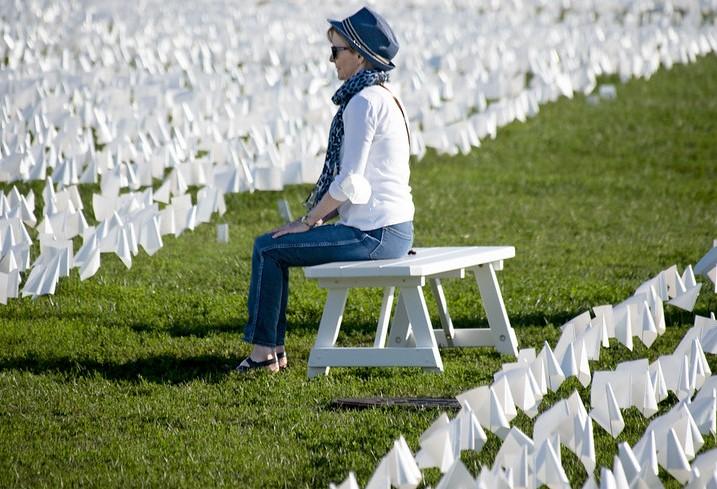
Burials at New York City’s Hart Island potter’s field began outnumbering expected deaths in early March 2020, coinciding with COVID-19 pandemic onset, peaking five weeks later with 22 deaths for each death during the same week in 2019, investigators from the City University of New York Institute for Demographic Research report.
The study, published yesterday in Scientific Reports, suggests that the pandemic greatly magnified inequalities and highlights the particularly devastating effects of COVID-19 on economically and socially vulnerable groups, the authors said.
The team searched adult burial records from Hart Island and daily death data from the city’s health statistics bureau to estimate unclaimed deaths over time and by borough from March to August 2020 relative to pre-pandemic levels.
More than 1 million people are buried at the Hart Island potter’s field, a public cemetery for deceased indigent, unknown, or unclaimed people.
“Communities of color and the poor were disproportionately impacted through disrupted social networks—another consequence of the COVID-19 pandemic and a marker of poor health and premature death—and this may have further compounded who got sick and received treatment or care,” the authors wrote.
Poorest borough had nearly a third of deaths
From 2015 to 2020, 6,683 people were interred on Hart Island, including 2,520 in 2020, compared with 862 and 939 in 2018 and 2019, respectively. An estimated 10% of excess COVID-19 deaths were unclaimed.
Communities of color and the poor were disproportionately impacted through disrupted social networks—another consequence of the COVID-19 pandemic and a marker of poor health and premature death—and this may have further compounded who got sick and received treatment or care.
In 2020, 31.5% of all unclaimed deaths occurred in the Bronx. “This is consistent with the hypothesis that economic vulnerability plays a key role in becoming an unclaimed death,” the researchers wrote.
The share of male unclaimed deaths was slightly higher or the same as in 2020 than in previous years (73.7% in 2020 vs 73.3% in 2019 and 73.7% in 2018), as was the average age at death (69.0 years in 2020 vs 67.6 in 2019 and 68.4 in 2018).
Establishing timely, automatic emergency burial assistance during disasters could decrease this burden and shorten the administrative lag that disproportionately affects poor and immigrant households, the authors said.
Antidepressant relieves fatigue in people with long COVID, study finds
State public health labs step up as CDC pauses testing for various pathogens, including rabies, mpox